



Why Accuracy Early in Procurement Matters
In hospitality procurement, accurate takeoffs play a critical role in shaping project budgets, procurement schedules, and overall execution. One of the most important yet frequently underestimated parts of that process is the takeoff.
A procurement takeoff is the detailed process of identifying and quantifying every item required for a project before purchasing begins. This includes furniture, fixtures, equipment, operating supplies, finishes, and installation related quantities. Accurate takeoffs create the foundation for budgeting, procurement coordination, scheduling, warehousing, logistics, and installation planning.
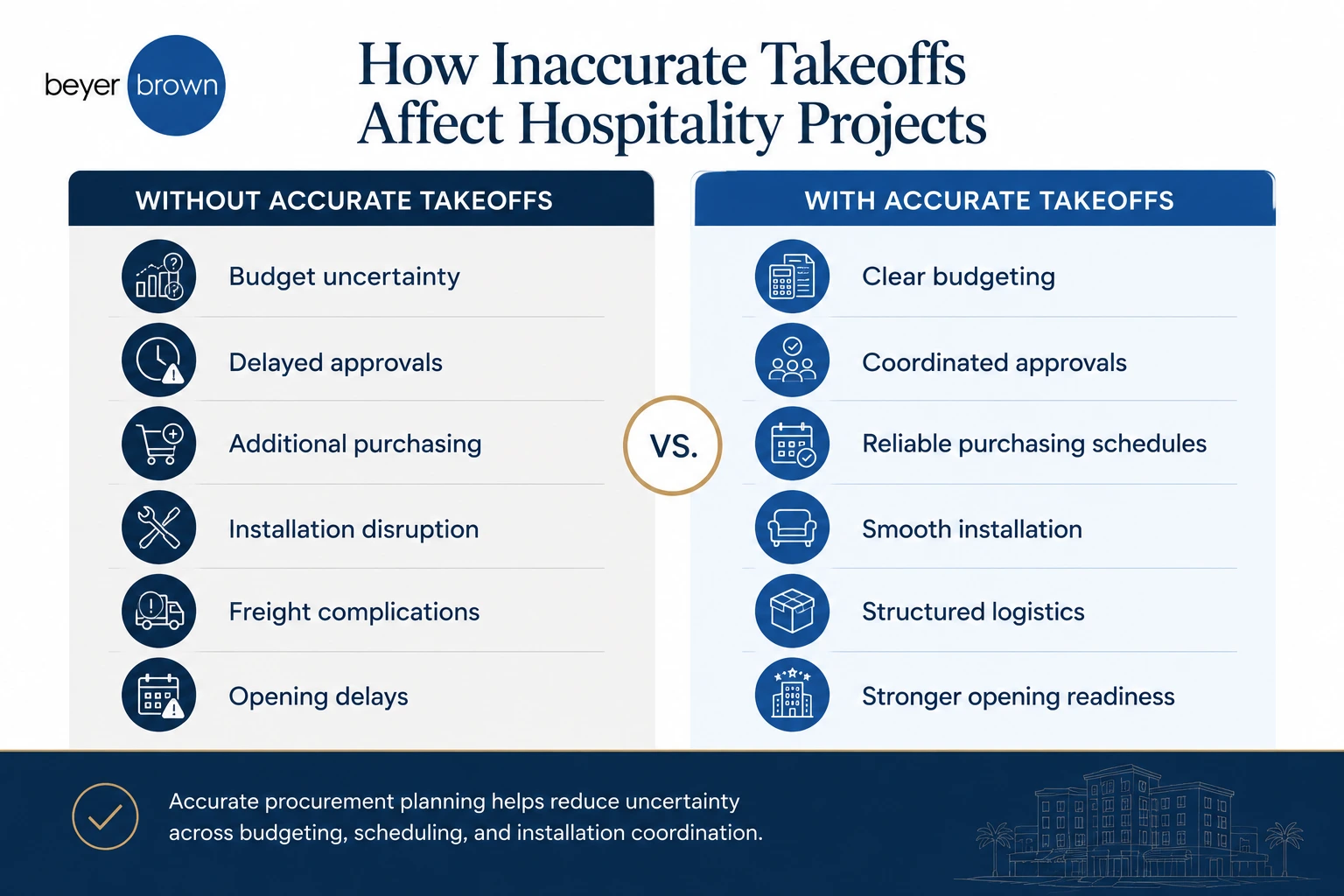
When takeoffs are incomplete or inaccurate, the impact rarely stays isolated to one phase of the project. Small quantity discrepancies can quickly affect procurement schedules, approval timelines, freight coordination, installation sequencing, and overall budget confidence.
For owners, developers, and project teams, inaccurate takeoffs often lead to difficult decisions later in the process. Missing quantities may require rush purchasing. Over ordering can increase storage and freight costs. Specification inconsistencies may delay approvals or create confusion across vendors and trades. In many cases, teams are forced to revisit decisions that should have been resolved much earlier.
Hospitality projects operate on carefully coordinated timelines with multiple stakeholders involved at every stage. Procurement accuracy supports predictability across that entire process.
This is why disciplined quantity verification and structured procurement planning play such a critical role in successful project execution.
At Beyer Brown, takeoffs are approached as a strategic part of procurement planning rather than a simple counting exercise. Accurate quantity verification supports clearer budgeting, stronger coordination, and more reliable execution throughout the lifecycle of a hospitality project.
Why Accurate Takeoffs Matter to Owners and Developers
Hospitality projects involve a significant number of moving parts. Procurement decisions must align with design intent, operational requirements, brand standards, construction progress, vendor lead times, and opening schedules.
Accurate hospitality procurement takeoffs create stronger alignment between budgeting, scheduling, operational planning, and installation coordination.
When quantities are incorrect at the beginning of a project, uncertainty often carries forward into every stage that follows. Budget projections become less reliable. Procurement schedules become harder to manage. Installation sequencing may need to change unexpectedly. Teams lose confidence in the information guiding decision making.
For owners and developers, this creates risk in several important ways.
Budget Uncertainty
Hospitality procurement budgets rely heavily on accurate quantity verification and disciplined procurement planning. If quantities are underestimated, additional purchasing requirements may appear later in the project after budgets have already been approved. If quantities are overestimated, projects may carry unnecessary purchasing, freight, warehousing, and handling costs.
In either scenario, inaccurate takeoffs reduce financial clarity.
This is particularly important in hospitality projects where procurement represents a substantial portion of the overall project investment. Preliminary budgets reflect actual project scope as accurately as possible through structured preliminary budgeting support
This is why early planning and disciplined quantity verification are closely connected to Beyer Brown’s approach to Beyer Brown’s Preliminary Budgeting services.
Timeline Disruptions
Takeoffs directly influence procurement schedules.
When quantities are incomplete or inaccurate, procurement teams may need to revise purchase orders, coordinate additional approvals, adjust vendor timelines, or manage supplemental shipments later in the project. These adjustments often affect installation schedules and opening readiness.
Hospitality projects depend on coordination between procurement, construction, ownership groups, designers, vendors, and installation teams. Even small quantity discrepancies can create delays when materials are no longer aligned with project sequencing.
For projects operating on fixed opening dates, these disruptions can become especially costly.
Approval Delays and Rework
Quantity inconsistencies frequently lead to additional review cycles between ownership teams, designers, procurement teams, and vendors.
If quantities do not align with specifications, floor plans, or operational requirements, approvals may stall while teams revisit scope. Revisions create additional administrative coordination and can slow progress across multiple procurement categories simultaneously.
Clear documentation and accurate quantity verification help reduce unnecessary rework and support smoother communication throughout the project lifecycle.
Installation and Operational Challenges
The effects of inaccurate takeoffs often become most visible during installation.
Missing quantities can delay room completion, public area setup, or operational readiness. Over ordering may create unnecessary storage challenges on site or increase warehousing costs. Inconsistent quantities can also affect brand standards and guest experience consistency across the property.
In hospitality environments, operational readiness depends on every component arriving correctly, on time, and aligned with the project scope.
That level of coordination starts with accurate procurement planning early in the process.
How Beyer Brown Supports Accurate Procurement Planning
At Beyer Brown, quantity verification is treated as an essential part of structured procurement execution.
Rather than relying solely on initial design documentation, procurement planning involves a coordinated review process that supports accuracy, alignment, and long term project visibility.
This process helps owners and developers gain greater confidence in project scope before purchasing begins .It also helps reduce procurement uncertainty before vendor coordination, purchasing schedules, and installation planning move forward.
Coordinated Scope Review
Hospitality procurement involves far more than identifying product quantities.
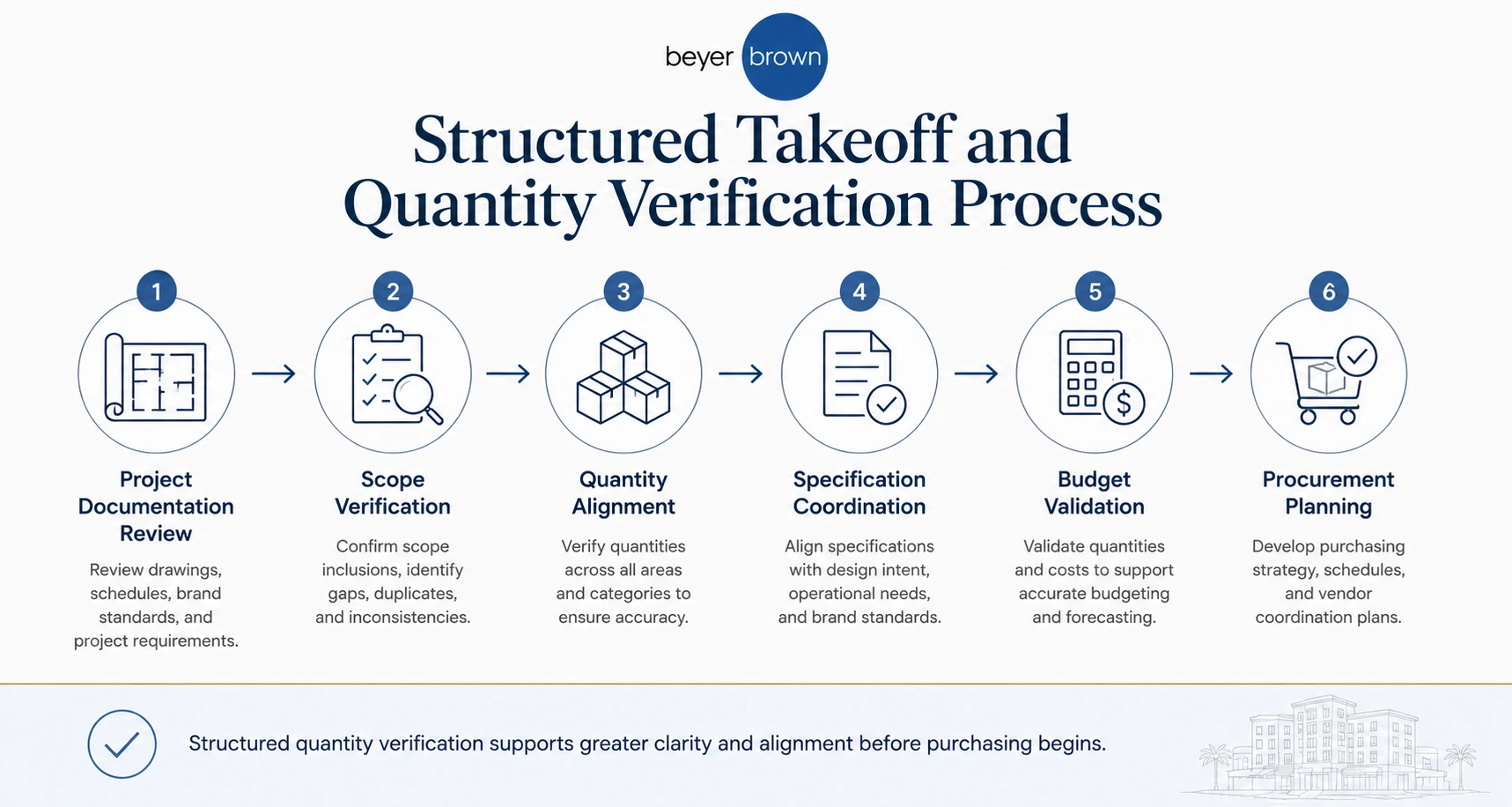
Teams must evaluate how specifications, operational requirements, design intent, brand standards, and construction documentation align together. Procurement planning requires coordination between multiple disciplines to confirm that scope reflects the actual needs of the property.
This is where structured procurement oversight becomes especially valuable.
Through services such as Specification Assistance, TakeOff & Quantity Verification, and Preliminary Budgeting support, procurement planning becomes more disciplined and transparent early in the project lifecycle.
Early Identification of Discrepancies
One of the most important benefits of accurate takeoffs is the ability to identify inconsistencies before purchasing begins.
This may include:
-
Missing guest room quantities
-
Duplicate items across procurement categories
-
Operational oversights
-
Specification inconsistencies
-
Brand standard conflicts
-
Coordination gaps between drawings and procurement scope
Addressing these issues early helps reduce downstream disruptions and supports more predictable project execution.
Improved Budget Confidence
Accurate takeoffs strengthen the reliability of procurement budgets.
When quantity verification is aligned with project scope, ownership teams gain clearer visibility into purchasing requirements earlier in the process. This supports more informed decision making and reduces the likelihood of significant procurement adjustments later in the project.
This level of visibility is especially important during renovations, phased projects, luxury hospitality developments, and projects operating within strict approval structures.
Alignment Across the Procurement Lifecycle
Quantity verification is not isolated to one procurement phase.
It influences budgeting, vendor coordination, purchasing schedules, freight planning, warehousing, installation sequencing, and opening readiness.
By approaching takeoffs as part of a larger procurement strategy, Beyer Brown helps create stronger alignment across the entire project lifecycle.
That alignment supports smoother execution and reduces unnecessary uncertainty for ownership and development teams.

Understanding the Takeoff and Quantity Verification Process
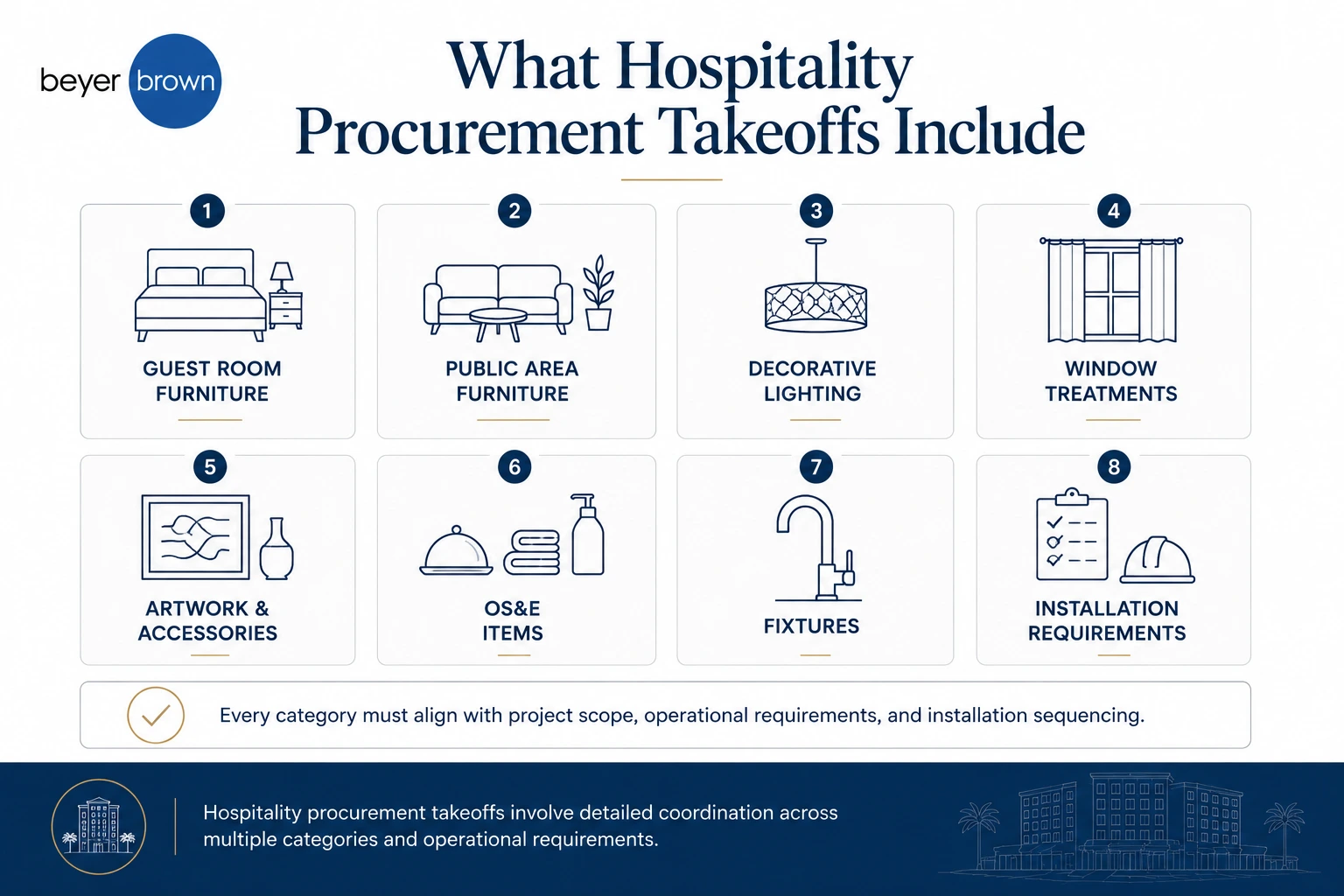
Accurate takeoffs require a structured and disciplined process.
In hospitality procurement, quantity verification involves much more than counting items on a floor plan. Procurement teams must evaluate how every component connects to operational functionality, guest experience requirements, installation sequencing, and overall project coordination.
A thoughtful process helps reduce risk before purchasing begins.
Reviewing Project Documentation
The process typically begins with a detailed review of project documentation.
This may include:
-
Floor plans
-
Design drawings
-
Furniture plans
-
Finish schedules
-
Brand standards
-
Specifications
-
Operational requirements
-
Construction documentation
Procurement teams evaluate how these materials align together and identify any inconsistencies or missing information that could affect purchasing later in the process. This review process supports more accurate FF&E procurement coordination and stronger project visibility before purchasing begins.
Verifying Scope Across Categories
Hospitality procurement often includes multiple procurement categories operating simultaneously.
These may include:
-
Guest room furniture
-
Public area furniture
-
Decorative lighting
-
Artwork
-
Window treatments
-
Operating supplies and equipment
-
Accessories
-
Fixtures
-
Specialty items
Each category must be reviewed carefully to confirm quantities, specifications, and project alignment.
Without coordinated verification, discrepancies between categories can easily create confusion later during procurement and installation.
Aligning Quantities With Operations
Hospitality procurement planning must also consider operational functionality.
For example, a guest room quantity may appear accurate on paper, but operational requirements could reveal additional needs related to housekeeping, storage, food and beverage service, or back of house functionality.
This operational perspective is important because procurement decisions affect how the property functions long after installation is complete.
Supporting Vendor Coordination
Accurate quantities also help vendors plan production schedules more effectively.
When quantities change repeatedly throughout the procurement process, vendors may need to revise production planning, adjust freight coordination, or reallocate manufacturing schedules. These changes can affect lead times and overall project sequencing.
Clear and verified procurement information supports more reliable coordination between procurement teams and vendor partners.
Maintaining Visibility Throughout the Process
Quantity verification is not a single checkpoint.
As projects evolve, procurement teams often revisit quantities to confirm alignment with design updates, construction progress, operational changes, or revised specifications.
Maintaining visibility throughout the procurement lifecycle helps reduce surprises later in the project and supports stronger communication across stakeholders.
This disciplined approach helps create greater confidence at every stage of execution.
The Long Term Impact of Procurement Accuracy
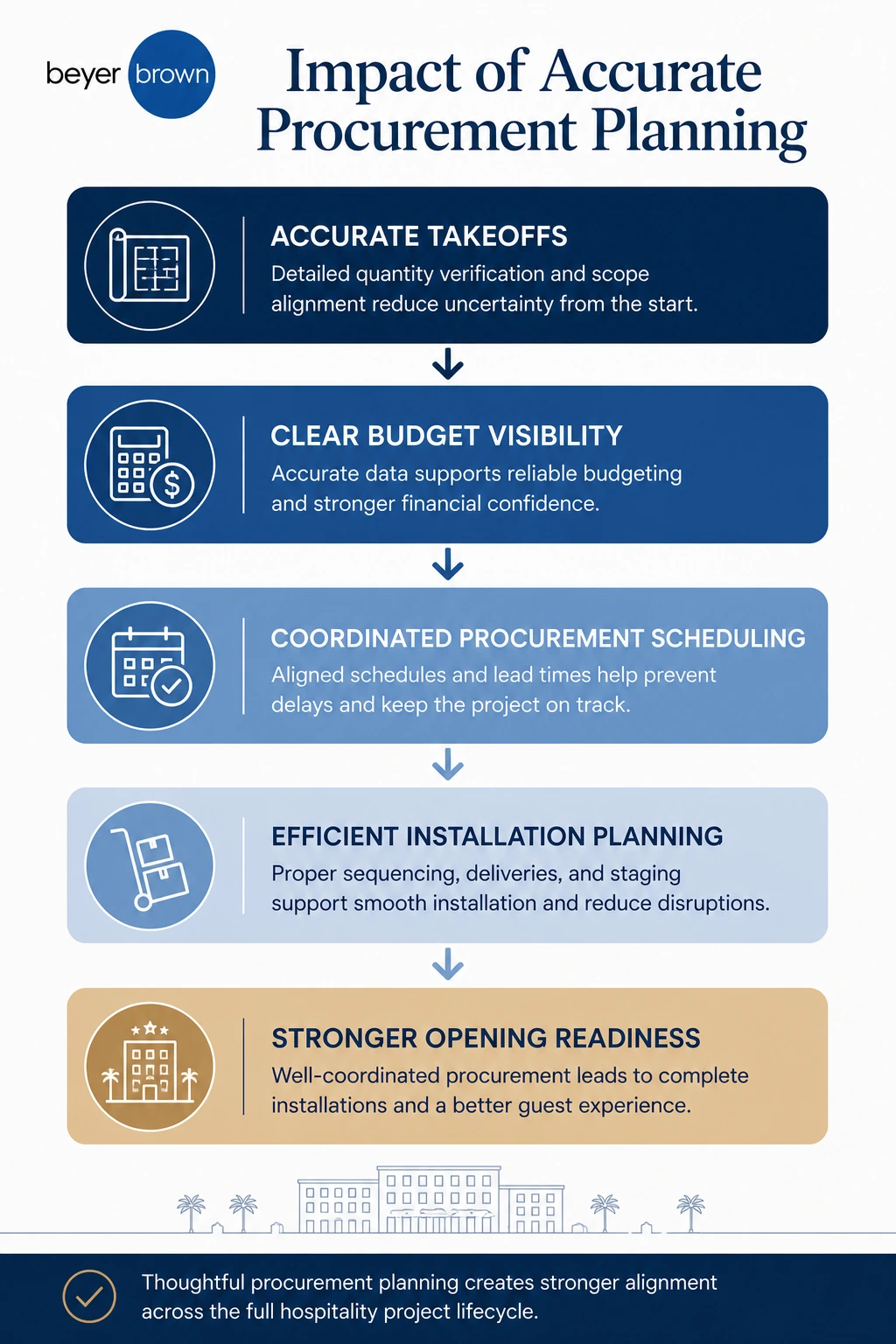
Accurate takeoffs do more than support purchasing efficiency. They support stronger hospitality procurement coordination across budgeting, scheduling, installation, and operational readiness.
When procurement planning is structured correctly early in the process, teams are better positioned to manage complexity with confidence.
More Predictable Budgets
Clear quantity verification supports more reliable procurement forecasting.
Owners and developers gain stronger visibility into purchasing requirements, allowing teams to make decisions earlier and with greater confidence. Budget discussions become more informed because procurement scope is better aligned with actual project needs.
This level of predictability helps reduce reactive decision making later in the project lifecycle.
Stronger Timeline Coordination
Procurement timelines depend heavily on accurate planning.
When quantities are verified early, vendor coordination becomes more efficient, purchasing schedules become more structured, and installation sequencing becomes easier to manage.
This coordinated approach supports smoother project execution and reduces unnecessary disruption across teams.
Improved Communication Across Stakeholders
Hospitality projects involve extensive coordination between ownership groups, procurement teams, designers, operators, construction teams, vendors, and installers.
Accurate procurement documentation helps create clearer communication across all stakeholders. Teams spend less time resolving discrepancies and more time moving the project forward efficiently.
This clarity becomes especially valuable during complex renovations, phased installations, and projects operating on accelerated timelines.
Better Opening Readiness
Opening readiness depends on coordinated execution.
Missing products, delayed deliveries, or inconsistent quantities can create operational challenges during final installation and property turnover. Accurate takeoffs help support smoother installation processes and stronger operational preparedness before opening.
This contributes to a more consistent guest experience and a more controlled transition into operations.
Reduced Long Term Project Stress
Perhaps most importantly, accurate procurement planning reduces unnecessary uncertainty.
Owners and developers benefit from greater confidence throughout the project lifecycle when procurement information is organized, verified, and aligned early in the process.
That confidence helps teams navigate complex hospitality projects with greater clarity and control.
Supporting Hospitality Projects Through Structured Procurement Planning
In hospitality procurement, accuracy early in the process creates stability later in the project.
Takeoffs influence far more than purchasing quantities. They affect budgeting confidence, procurement coordination, scheduling, installation sequencing, operational readiness, and overall project predictability.
When quantities are incomplete or inconsistent, teams often spend valuable time revisiting decisions that could have been resolved earlier through structured planning and disciplined verification.
For owners and developers, accurate procurement planning helps reduce uncertainty and supports more confident decision making throughout the project lifecycle.
At Beyer Brown, hospitality procurement planning is approached with a focus on clarity, coordination, quantity verification, and long term project alignment. Through structured quantity verification, specification coordination, budgeting support, and lifecycle procurement oversight, projects are positioned for smoother execution and more reliable outcomes.
In complex hospitality environments, thoughtful planning creates stronger foundations for successful project delivery.