


How Accurate Preliminary Budgeting Reduces Approval Delays
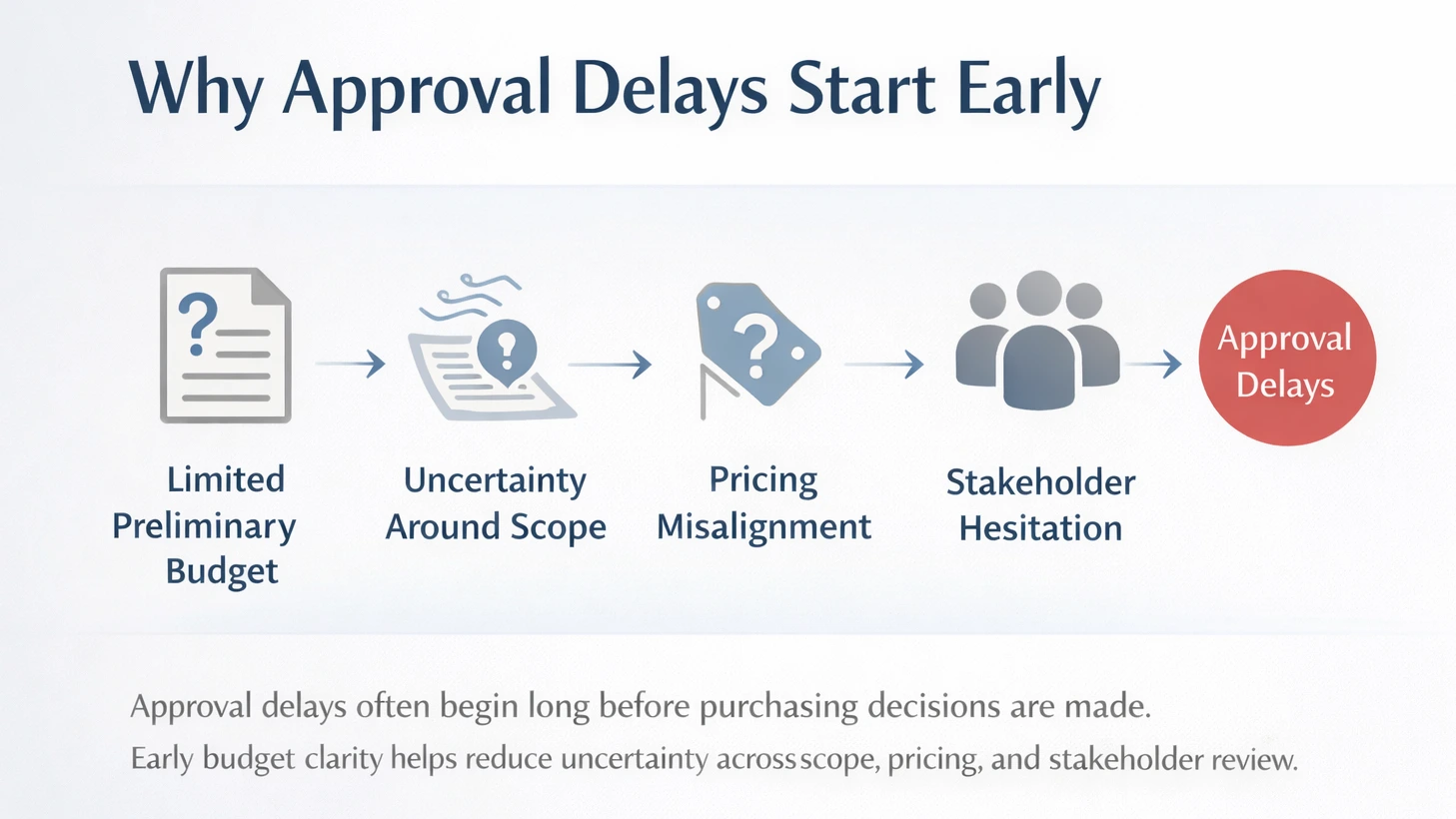
Approval delays in hospitality projects are rarely caused by one decision alone. More often, they are the result of uncertainty that begins early and continues to affect later stages of planning, review, and execution. In development and renovation projects, accurate preliminary budgeting plays a direct role in how smoothly approvals move forward. When budgets are incomplete, misaligned, or based on assumptions rather than validated inputs, decision making becomes slower, more cautious, and more reactive.
Owners and developers are then placed in a position where they must reassess scope, revisit selections, or request additional rounds of clarification. That friction can affect procurement timing, purchasing readiness, installation coordination, and overall project momentum. A more structured approach to preliminary budgeting creates a clearer financial framework early, helping projects move through approvals with greater confidence and fewer disruptions.
Why Accurate Preliminary Budgeting Matters to Owners and Developers
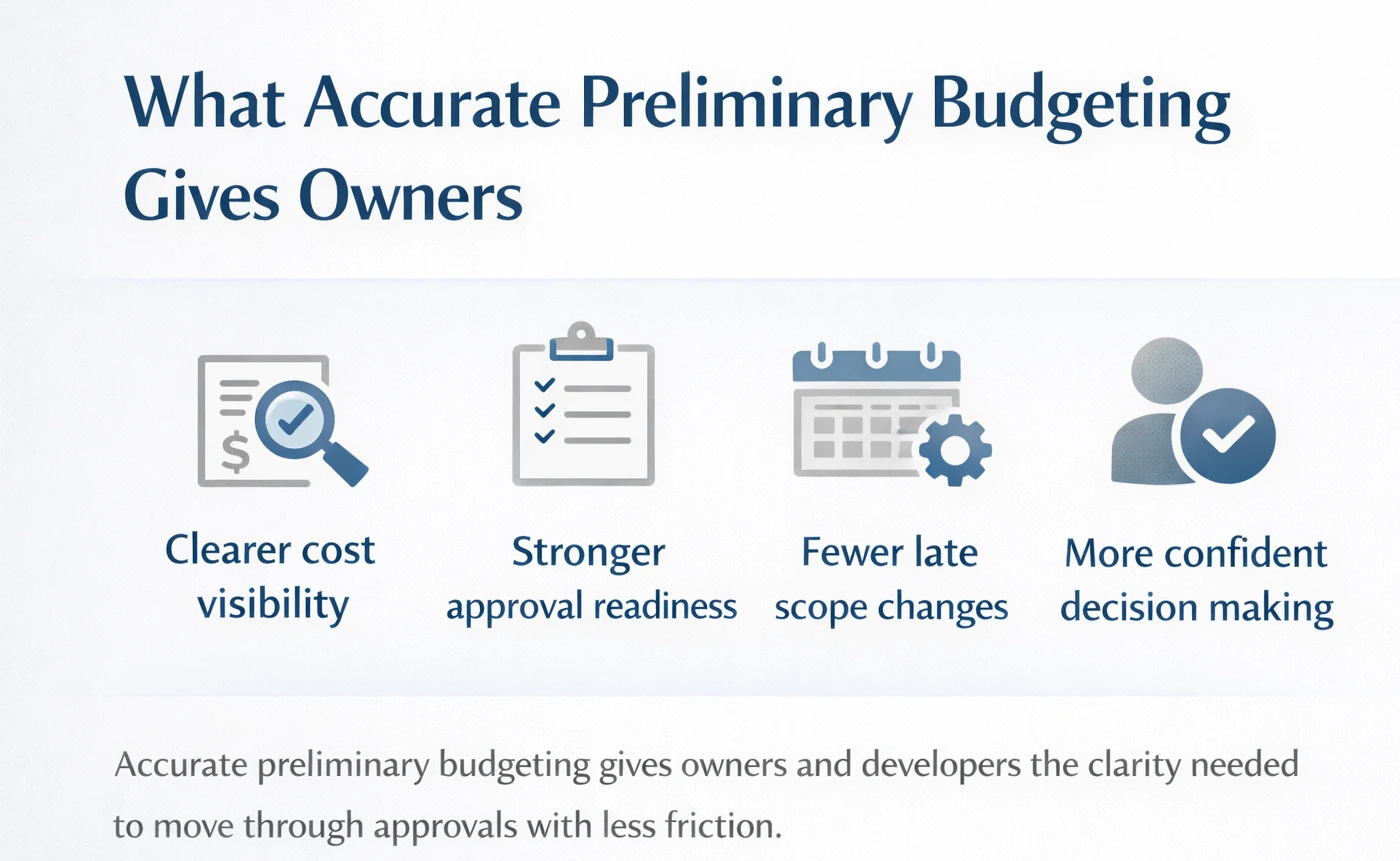
For owners and developers, early budgeting is not simply a financial exercise. It is a planning tool that shapes decisions across design alignment, capital review, brand coordination, and procurement readiness. When accurate preliminary budgeting is in place, it gives teams a stronger understanding of what the project requires and what it will realistically take to execute it well.
A well-structured budget improves visibility across FF&E and OS&E categories, clarifies cost drivers, and helps stakeholders evaluate scope with more confidence. It also reduces the likelihood of late-stage redesigns or avoidable value engineering conversations that emerge when cost expectations were not clearly defined at the start. Beyer Brown’s
How Beyer Brown Solves the Issue Through Procurement Alignment
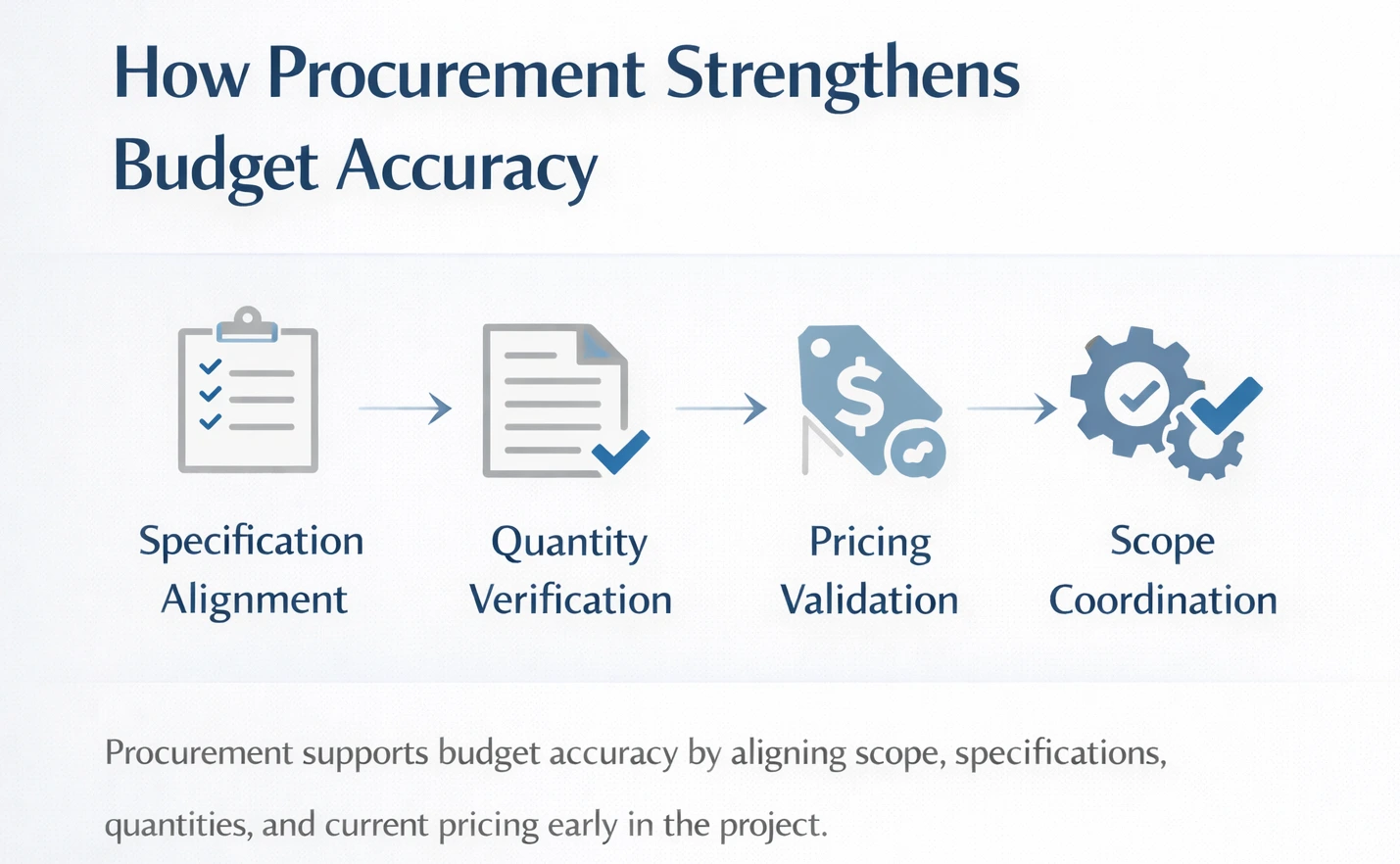
Accurate preliminary budgeting is most effective when it is supported by a disciplined procurement process rather than broad estimating alone. Procurement brings market awareness, specification clarity, and cross-team coordination into the budgeting stage, which improves both the reliability of the numbers and the confidence behind them.
One of the biggest ways this happens is through Specification Assistance. When materials, finishes, product categories, and performance requirements are defined more clearly, the budget can reflect the real design intent rather than a placeholder assumption. This reduces the risk of mismatch between design expectations and cost planning. Beyer Brown’s Specification Assistance service is specifically framed around helping projects move through approvals faster with more practical and compliant specifications.
Budget accuracy is also strengthened by Takeoff & Quantity Verifications. Even minor quantity discrepancies can materially affect the project budget, especially across guestrooms, public spaces, and operational support areas. Validating quantities early gives teams a more dependable financial picture and reduces the chance of late budget revisions after approvals are already underway.
For projects that include operational items beyond the design package, OS&E Purchasing also supports early scope clarity. OS&E is often overlooked during initial planning, yet it affects operational readiness and total project cost. Bringing those needs into the budgeting conversation earlier reduces omissions that can later delay approvals or force budget rework.
What the Real Process Looks Like
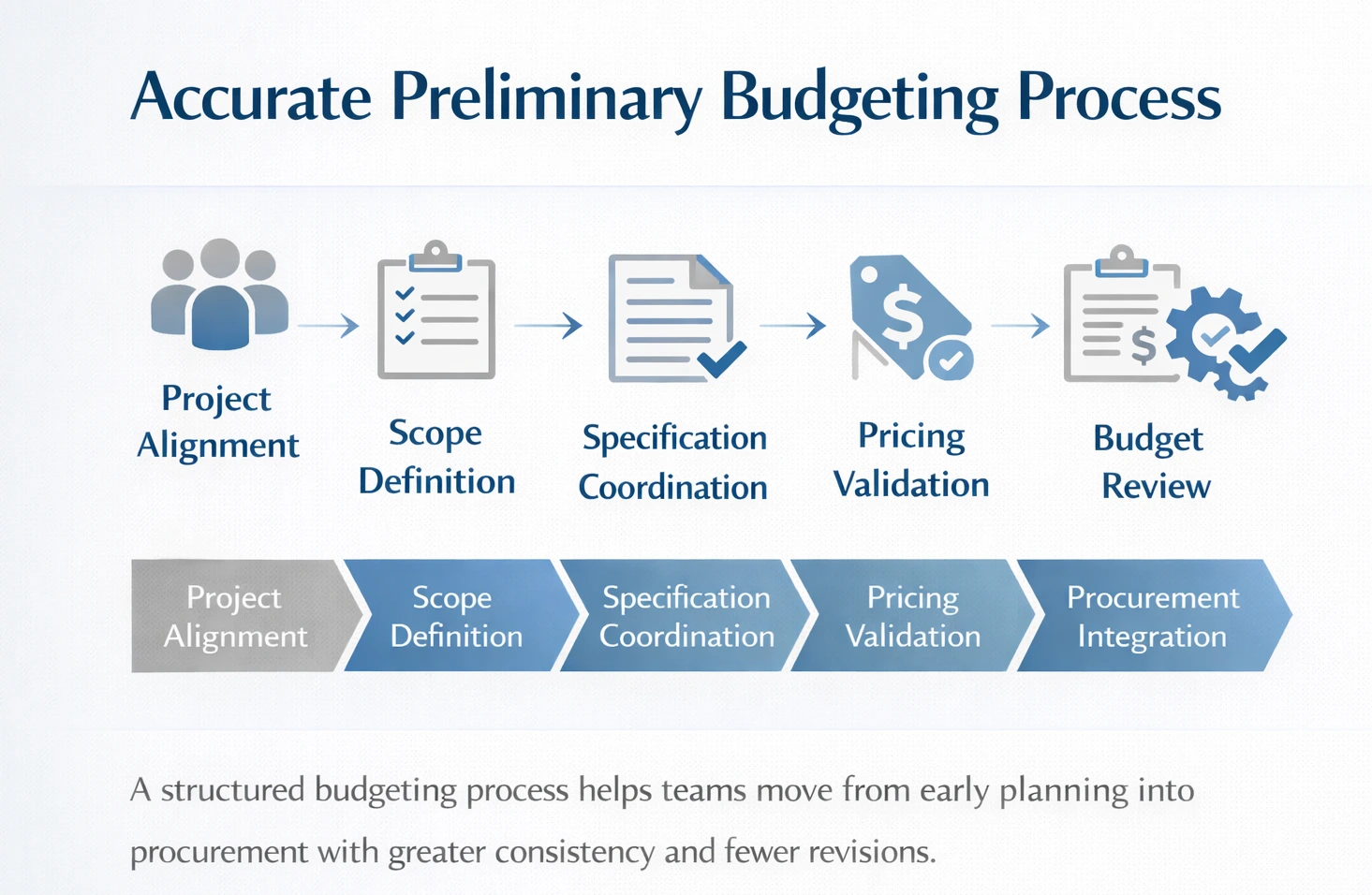
A structured preliminary budgeting process follows a clear sequence that connects early planning to later procurement execution. This is where accurate preliminary budgeting becomes more than a set of numbers. It becomes a working decision framework for the project team.
The process begins with project alignment. Teams review the overall vision, property positioning, brand expectations, and early design direction so the budget reflects the intent of the project. From there, scope is defined across FF&E and OS&E categories. If those categories are not clearly identified early, budget gaps can emerge later. Beyer Brown’s recent article on what OS&E includes in hospitality projects is a helpful supporting link here because it explains how often these elements are missed in early planning.
Next comes specification coordination and quantity verification. These two steps help determine what is actually being priced and in what volume. Pricing can then be validated against current market conditions, supplier feedback, and project-specific scope. Once that information is consolidated, it becomes far easier to review the budget with stakeholders and move through approvals with fewer open questions.
Finally, the budget should connect directly into the broader FF&E Procurement Process. Beyer Brown’s live process page frames procurement as a structured sequence of stages rather than a simple purchasing task, which makes it a strong internal link for this section. When the budget is built in a way that supports the procurement lifecycle, early approvals become more meaningful because they are grounded in execution reality.
What Changes When the Budget is Accurate Early
When accurate preliminary budgeting is done well, the effect on approvals and execution is significant. Stakeholders move more quickly because the information in front of them is clearer, more complete, and better aligned with the real scope of the project. That means fewer pauses, fewer revision cycles, and fewer late-stage questions that slow decision making.
Projects also benefit from reduced scope changes. When scope, quantities, and budget expectations are aligned earlier, teams are less likely to revisit major selections after reviews are already underway. That protects design momentum and reduces the pressure that often builds when purchasing deadlines begin to tighten.
There is also a broader operational advantage. Strong early budgeting creates better coordination across owners, designers, procurement teams, and project managers. That shared clarity supports more predictable project movement overall. For renovation work or branded updates, this same discipline can also support PIP Analysis & Reporting, where clarity around scope, cost, and timing directly affects decision quality and approval readiness.
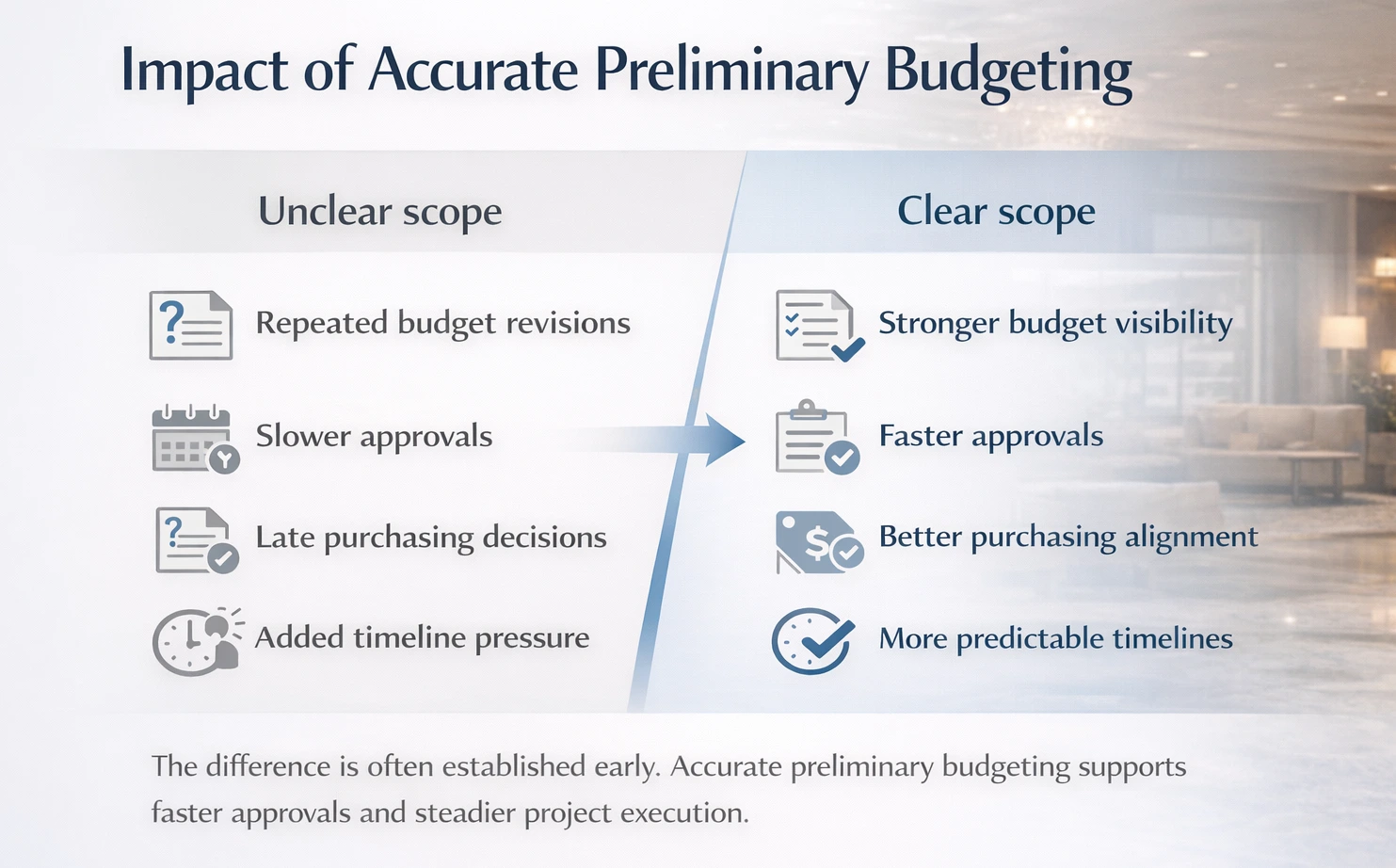
By contrast, when early budgets are rough, fragmented, or missing key scope elements, approvals often become slower and more reactive. Purchasing decisions may be delayed, schedule pressure can increase, and teams may spend valuable time resolving questions that should have been addressed much earlier. Accurate preliminary budgeting helps prevent that pattern by giving projects a steadier foundation.
Building Approval Confidence Through Early Clarity
Accurate preliminary budgeting is not only about setting a number. It is about creating the clarity that allows a project to move forward with confidence. When budgets are built with stronger scope definition, validated quantities, specification alignment, and procurement insight, owners and developers gain a clearer path through approvals and a more predictable path into execution.
That is where Beyer Brown’s value becomes especially clear. The process is not limited to budgeting in isolation. It connects early financial planning to procurement strategy, project coordination, and lifecycle execution. For hospitality teams managing complexity, that kind of structure reduces risk, supports approvals, and makes the project easier to move forward with confidence.