



Resort FF&E procurement brings together spaces that follow different design, purchasing, and installation requirements. Guest rooms may use repeatable furnishing packages, while suites, dining venues, gathering areas, and outdoor amenities call for different quantities, materials, vendors, and delivery plans. Those differences must be tracked within a property-wide budget and schedule, especially when the resort remains open during renovation.
A product can be approved for one space before the conditions for receiving or installing it are settled. Construction progress may change access to a public area, a revised room mix may change an order quantity, or a finish selected for an interior may need further review for beachfront use. Beyer Brown’s procurement work connects these decisions to the specifications, vendor commitments, production status, and installation plans they affect, so the project team can address a change before it creates a conflict on site.
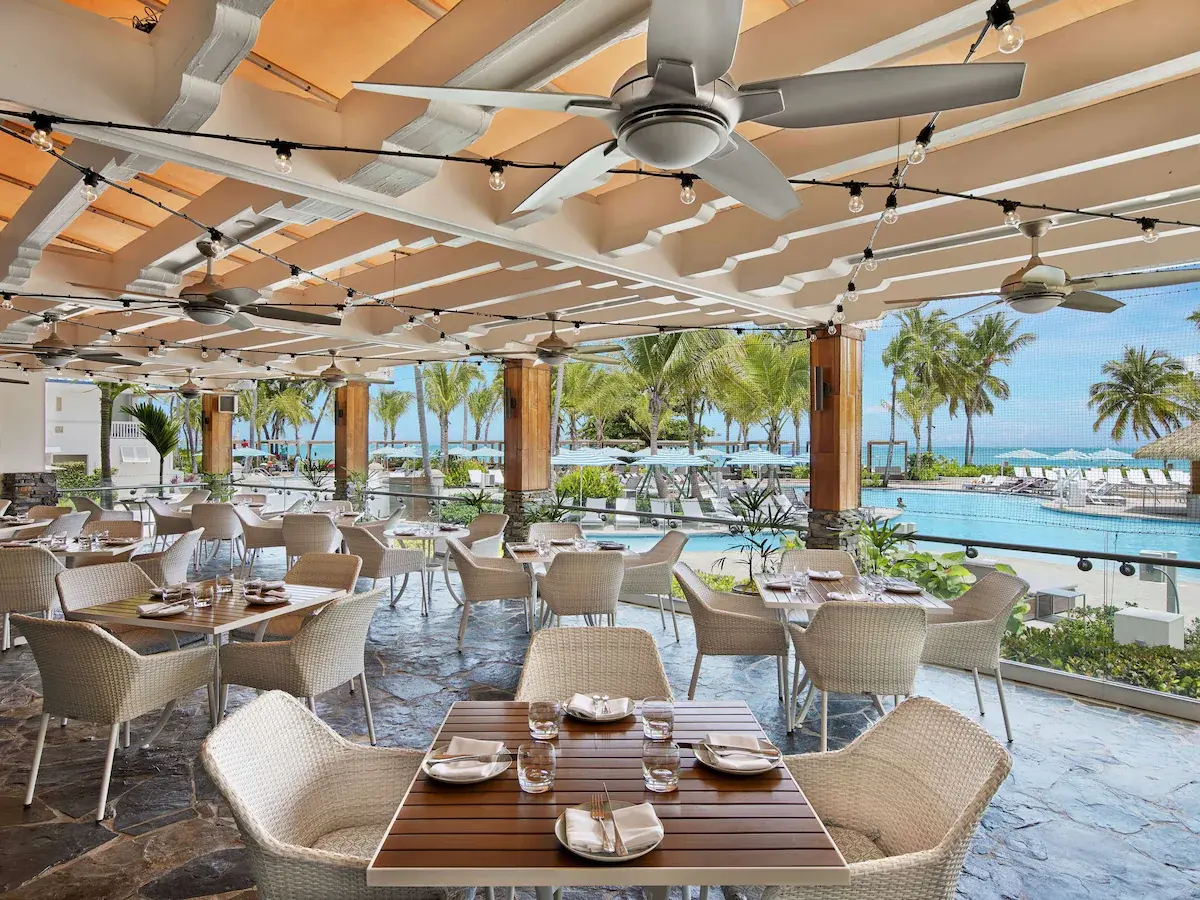
At Fairmont El San Juan Hotel, Beyer Brown’s FF&E procurement scope covered guest rooms and key public areas, including the lobby and beach club. Coordinating those spaces across multiple accommodation types within an active beachfront resort required attention to the approved design and the conditions under which furnishings could be produced, delivered, and installed. The project provides a useful example of why resort procurement must remain connected across the full property
Why Property-Wide Visibility Matters to Owners and Developers
Resort budgets are commonly reviewed by area, with separate allocations for accommodations, food and beverage spaces, and amenities. That structure helps ownership assess each part of the project, but purchasing commitments can cross those boundaries. A revised room mix may change quantities on an order serving several accommodation types. A finish revision may affect both the quoted price and production lead time. A construction delay may leave products ready to ship before the property can receive them.
Ownership needs to distinguish among estimated costs, approved selections, and amounts committed through purchase orders. It also needs to know which quantities are based on verified plans and which still depend on a design or scope decision. Without those distinctions, an apparently settled FF&E budget can conceal items that have yet to be fully defined or priced. Clear reporting allows the team to assess whether a change affects the purchasing total, the cash flow schedule, the delivery plan, or more than one of these.
Accommodation types make quantity verification especially consequential. A single guest room count does not account for differences in layouts, furnishing packages, or the number of pieces required in each room type. Beyer Brown’s takeoff and quantity verification work compares the applicable plans and specifications with the quantities used for pricing and purchasing. When the room mix or a plan changes, the affected counts can be reviewed before the purchasing documents are finalized.

Public spaces require a different level of scrutiny. Their furnishings may be less repetitive, yet an individual piece can have substantial cost, a long production lead time, or dimensions and installation requirements that depend on site conditions. Reviewing these items alongside the accommodation packages gives ownership a clearer view of which decisions are ready for commitment and which still require coordination with design, construction, or operations.
How Beyer Brown Carries Decisions Into Purchasing
Beyer Brown’s resort procurement work begins by establishing what each vendor is being asked to price and produce. The team reviews the applicable plans, room types, specifications, and quantities, then compares quotations against the approved design direction, budget, and required schedule. Questions about scope or product details need to be resolved with the appropriate project participants before they are carried into a purchase order.
A change to one document can affect several others. If a room layout is revised, the quantity schedule and vendor pricing may need updating. If a finish changes after a quotation is received, the team must confirm its effect on cost, lead time, and any previously reviewed sample or submittal. Beyer Brown tracks those decisions through approvals and purchasing documentation so that the order reflects the product the team has agreed to buy.


Fairmont El San Juan Hotel illustrates why that review must account for intended use as well as appearance. Beyer Brown’s project profile describes specification review, vendor alignment, and production tracking across multiple accommodation types. It also notes that materials and finishes were evaluated for durability in the property’s humid beachfront environment. The appropriate selection for a particular location depends on its exposure and performance requirements alongside the design intent.
The purchasing decision remains relevant after the order is released. Beyer Brown’s FF&E procurement process includes purchase order management, production and freight tracking, installation coordination, and deficiency resolution. Keeping the approved specification, vendor commitment, and current status connected allows the team to identify what a later change affects and communicate it to the people preparing the space for installation.
What a Resort Delivery Plan Must Account For
A vendor’s expected ship date does not establish when a furnishing can be installed. The approved product must complete production, move through freight and receiving, and arrive when the property has a suitable place to hold it or a space ready for installation. At a resort, those conditions can differ among guest rooms, public areas, and outdoor venues, even when their furnishings are purchased under the same project schedule.
Beyer Brown tracks vendor progress and freight against the planned installation sequence. If production moves later, the team can identify which delivery window and space are affected and communicate the change to ownership and the installation contractor. If construction or operations changes when an area can be accessed, the team may need to adjust shipment timing, receiving, or storage arrangements. Tracking connects a reported date to the decisions required at the property.
An operating resort adds practical constraints to receiving. Products may arrive from several vendors, require different handling, and move through areas still in use by guests or staff. Delivery planning must account for available routes, event activity, construction work, and the protection of completed spaces. Arriving too early can create storage and handling costs; arriving too late can prevent an otherwise ready area from being furnished.
Beyer Brown’s procurement process includes coordinating information with the selected installation contractor and reporting on installation progress. It also includes working with ownership and vendors on the deficiency list, so damaged, missing, or unresolved items remain visible through closeout. Its Fairmont El San Juan Hotel project profile identifies phased installation and delivery sequencing around construction milestones and event programming within an active resort. The schedule therefore needed to account for when each area could receive its furnishings, as well as when vendors could supply them.
The Project Impact: Distinct Spaces, One Coordinated Result
At Fairmont El San Juan Hotel, the guest accommodations, lobby, beach club, and other shared areas each have a different function within the resort. Their furnishing packages need to serve those functions while remaining consistent with the approved design and the property’s operational requirements. Procurement contributes to that result by keeping each selection tied to its intended location, verified quantity, vendor order, and installation sequence.
That connection matters most when one part of a project changes. A revised room layout may require a quantity adjustment across an accommodation type. A proposed finish substitution may need review by design, ownership, and operations before it is approved for production. If a public area is delayed, products already in transit may need a different receiving or storage plan. Beyer Brown’s role is to identify the affected orders and schedules, document the agreed direction, and carry that information to the vendors and project partners responsible for the next step.
For ownership, this approach provides clearer visibility into commitments and decisions that remain open. Designers can confirm that the product being manufactured reflects the approved selection. Operators and installers can plan around current information about what will arrive and when a space can receive it. These connections matter at turnover, when furnishings must suit their intended use and outstanding items need a clear path to resolution.

Procurement as a Continuing Project Partnership
A resort’s approved design and FF&E budget set the direction, but neither can account for every condition that emerges during purchasing and installation. Room configurations may change, vendors confirm production details, and the property’s readiness to receive furnishings can shift. The project team needs to understand what each development affects while there is still time to make an informed decision.
Beyer Brown works with owners, designers, operators, vendors, and installation partners to carry approved decisions through those changes. At Fairmont El San Juan Hotel, its procurement scope extended across accommodations and key public areas within an active beachfront resort. The work required coordination between the individual requirements of those spaces and the broader purchasing and delivery plan.
The strategic value of a procurement partnership on a resort project lies in giving decision makers a dependable view of what has been approved, what has been committed, and what still requires resolution. With that visibility, they have a stronger basis for managing the investment and preparing each space for use without losing sight of the property as a whole.