


In hospitality projects, early FF&E procurement planning plays a critical role in protecting project timelines. While construction schedules often receive the greatest attention during development planning, procurement timing can significantly influence whether a project progresses smoothly or encounters delays.
Furniture, fixtures, and equipment represent essential operational components of a hospitality property. Yet procurement planning is frequently initiated later in the project lifecycle, once design selections are finalized and construction is already underway. By that stage, manufacturing lead times, production sequencing, freight coordination, and installation readiness may already be placing pressure on the schedule.
Without early coordination, procurement activities can compress project timelines and introduce unnecessary risk. Production may require expedited timelines, logistics planning may become reactive, and installation sequencing may need to adjust to accommodate delayed deliveries.
Early FF&E procurement planning addresses these challenges by aligning vendor timelines, logistics coordination, and installation readiness with the broader construction schedule. When procurement strategy is integrated into the early stages of project planning, owners and developers gain greater visibility into production timelines and can make informed decisions that help maintain schedule stability throughout the project lifecycle.
For hospitality owners and developers, the timing of procurement decisions often determines how confidently a project moves from planning to installation.
Why Early Procurement Planning Matters to Owners and Developers
Hospitality projects operate within tightly coordinated development timelines. Construction milestones, brand approvals, financing structures, and operational launch plans all depend on predictable progress across multiple project disciplines.
Procurement timing plays an important role in maintaining that alignment.
Manufacturing lead times for hospitality furniture and fixtures can extend for several weeks or even months depending on customization requirements, production capacity, and global supply conditions. Freight scheduling, warehouse staging, and installation sequencing add additional layers of coordination that must remain aligned with construction progress.
When procurement planning begins too late in the project lifecycle, these variables can quickly compress the overall project schedule. Vendors may be required to accelerate production timelines, logistics planning may become reactive, and installation sequencing may need to adjust to accommodate delayed deliveries.
For owners and developers, these disruptions carry both financial and operational implications. Expedited production and freight costs can increase project expenses, while delayed deliveries can slow installation progress and extend the timeline required for a property to become operational.
Early FF&E procurement planning provides visibility into these factors before they affect the schedule. When procurement timelines are established early in the development process, project teams gain a clearer understanding of manufacturing lead times, logistics coordination requirements, and installation sequencing considerations.
These financial pressures are explored further in Strategic FF&E Procurement That Prevents Cost Overruns and Delays, which examines how early procurement coordination supports both budget and schedule stability.
For renovation projects involving brand mandated Property Improvement Plans, early procurement coordination becomes even more important. Brand compliance often requires strict specification alignment and milestone verification throughout the renovation process. Aligning procurement planning with these review stages helps ensure that production timelines and brand approval requirements move forward together.
In hospitality development, maintaining schedule integrity requires coordination across every phase of the project lifecycle. Early procurement planning helps ensure that manufacturing, logistics, and installation activities support that timeline rather than compete with it.
How Beyer Brown Supports Early Procurement Planning
Early procurement planning involves more than initiating purchasing activities sooner. It requires a structured approach that aligns design coordination, vendor communication, and logistics strategy with the broader project timeline.
Beyer Brown approaches procurement as a lifecycle discipline that begins during the early planning stages of a hospitality project. Rather than waiting until construction is underway, procurement strategy is integrated alongside design development and project scheduling.
Through FF&E Procurement Services, procurement planning begins with a clear understanding of project scope, anticipated construction milestones, and the operational requirements of the property. Establishing this alignment early allows procurement teams to evaluate vendor lead times, identify potential scheduling risks, and coordinate production timelines that support the overall development schedule.
Specification coordination is another essential component of early planning. Through Specification Assistance, design intent is reviewed alongside manufacturer capabilities to confirm that selections can be produced within the required timeframe. Addressing these considerations early helps prevent specification conflicts, substitution requests, or manufacturing delays that might otherwise affect installation sequencing.
For renovation projects governed by brand standards, early procurement planning may also include PIP Analysis and Reporting. Reviewing Property Improvement Plan requirements early in the procurement lifecycle allows teams to identify potential specification discrepancies, quantity considerations, and compliance requirements before purchasing commitments are made.
Early coordination across these areas provides owners and developers with greater clarity around how procurement activities align with the broader construction schedule. Instead of introducing uncertainty later in the project, procurement planning becomes a structured component of the development strategy.
By integrating procurement into the early stages of project planning, teams gain visibility into manufacturing timelines, logistics coordination requirements, and installation sequencing considerations. This visibility helps ensure that procurement activities support the project schedule rather than compress it.
The Procurement Planning Process
Early FF&E procurement planning follows a structured sequence designed to align manufacturing timelines, logistics coordination, and installation readiness with the broader hospitality project schedule.
At Beyer Brown, early procurement planning begins with scope validation and quantity verification. Project documentation is reviewed to confirm that specifications, quantities, and design selections accurately reflect the operational requirements of the property. Establishing this clarity early helps prevent reorder scenarios or specification discrepancies that could affect production timelines later in the project lifecycle.
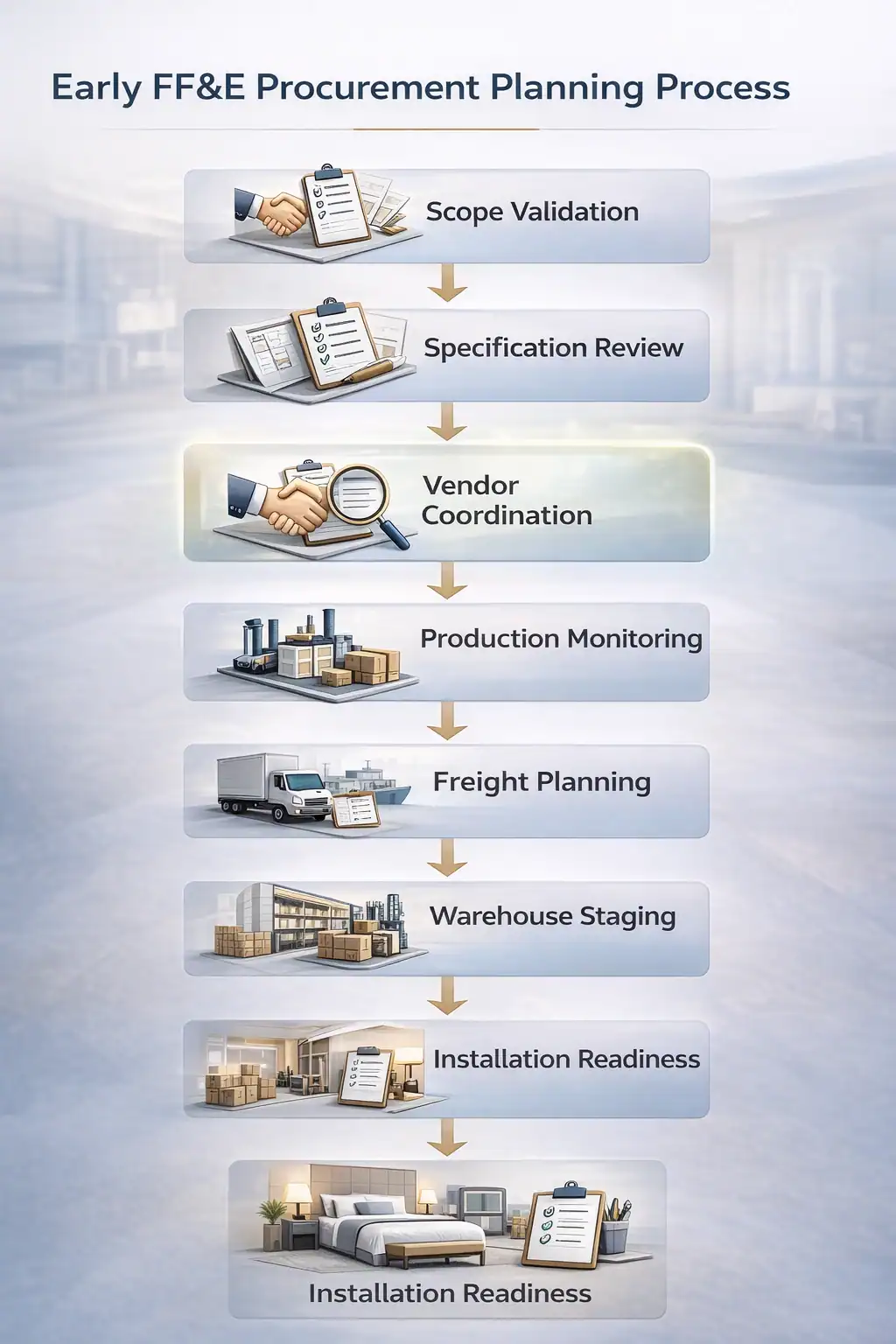
Once the project scope is confirmed, vendor coordination begins. Manufacturing partners are evaluated not only for quality and reliability, but also for their ability to meet the required project timeline. Lead times, production capacity, and scheduling considerations are reviewed to ensure that vendor timelines align with the anticipated construction schedule.
After vendors are confirmed, manufacturing timelines are integrated into the project schedule. Production monitoring allows procurement teams to track manufacturing progress and identify potential delays before they affect installation readiness. When issues arise, early visibility allows adjustments to logistics planning or installation sequencing while the schedule still has flexibility.
Freight planning is another critical component of the process. Logistics strategies are developed to ensure deliveries arrive in alignment with construction milestones and room readiness. Coordinating freight scheduling with the project timeline helps prevent scenarios where goods arrive too early and require extended storage, or too late and disrupt installation sequencing.
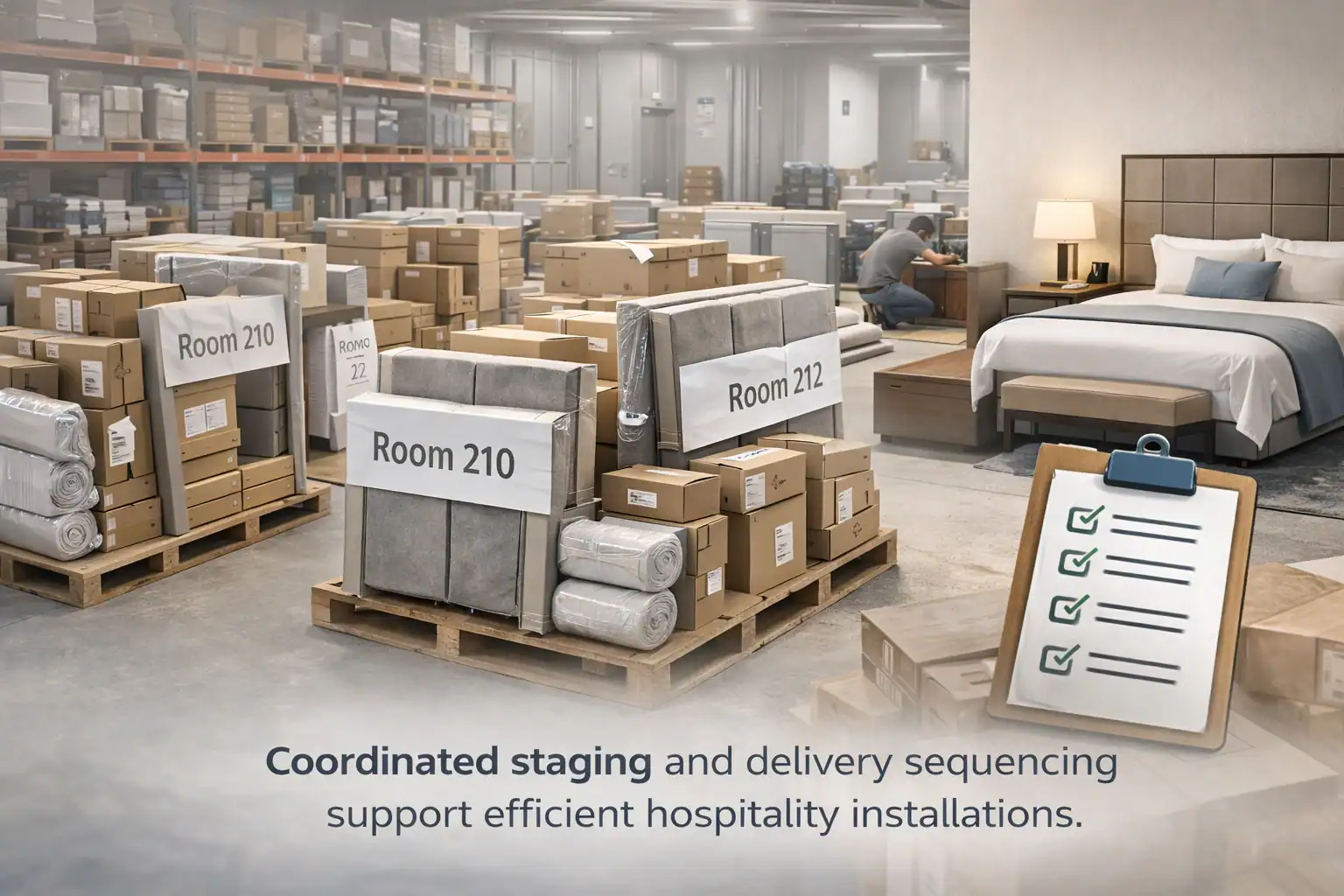
Warehouse staging and inspection processes further support installation readiness. Organizing shipments before they reach the property allows installation teams to receive goods in the correct sequence, reducing delays during the final stages of the renovation.
This coordinated process is outlined in greater detail in The FF&E Procurement Process for Hospitality Projects Explained. When procurement planning follows a structured lifecycle approach, manufacturing, logistics, and installation activities remain aligned with the broader project timeline.
Project Impact on Timeline Stability
The value of early FF&E procurement planning becomes most visible as a project approaches the final stages of construction and installation. At this point in the development lifecycle, coordination between vendors, logistics providers, and installation teams determines how smoothly the project moves toward operational readiness.
When procurement planning begins early, manufacturing timelines are already aligned with construction progress. Deliveries can be scheduled in coordination with room readiness, allowing installation teams to work efficiently and maintain construction momentum. Instead of reacting to delayed shipments or misaligned deliveries, project teams move through installation with greater clarity and confidence.
This coordination plays a significant role in protecting project timelines. Goods arrive in the correct sequence, warehouse staging supports installation efficiency, and potential delays can be addressed earlier in the process when adjustments are still possible. Maintaining this level of alignment reduces the likelihood that installation schedules become compressed during the final phases of the renovation.
Financial predictability is another important outcome. When production timelines and logistics coordination are integrated into the project schedule early, owners gain a clearer understanding of how procurement activities affect the broader development timeline. This visibility helps reduce the need for expedited production, emergency freight arrangements, or extended storage costs that can arise when procurement begins too late.
Operational readiness also benefits from early procurement coordination. Installation represents the transition between construction and property operations. When deliveries, staging, and installation sequencing are carefully planned, rooms can be completed in a consistent progression that allows operations teams to prepare the property for opening without unnecessary disruption.

For hospitality owners and developers, these outcomes represent more than simple scheduling efficiencies. They reflect a coordinated approach that protects both the project timeline and the overall performance of the asset.
Strategic Value and Partnership
Early FF&E procurement planning is not simply about placing orders sooner. It is about creating alignment between manufacturing timelines, logistics coordination, and construction progress during the earliest stages of a hospitality project.
When procurement strategy is introduced early in the development lifecycle, owners and project teams gain visibility into the variables that influence project timelines. Production capacity, freight coordination, installation sequencing, and vendor timelines can be evaluated and integrated into the broader project schedule before they create pressure on the construction timeline.
This level of coordination allows projects to move forward with greater clarity and predictability. Instead of reacting to production delays or compressed installation schedules, teams are able to anticipate challenges and adjust planning while the schedule still allows flexibility.
At Beyer Brown, procurement planning is approached as a structured component of hospitality project delivery. Through thoughtful coordination and disciplined lifecycle oversight, procurement becomes a stabilizing element within complex developments.
For owners and developers seeking confidence in how a renovation or new development progresses, early procurement planning helps ensure that manufacturing, logistics, and installation activities support the broader goals of the project.
Owners evaluating procurement structure often consider whether purchasing should be handled internally or through a structured procurement partner. This comparison is explored in FF&E Procurement vs Direct Purchasing: What Owners Should Consider, which examines how procurement structure influences coordination across hospitality projects.
The result is a clearer path from planning to opening and a stronger foundation for long term asset performance.
Frequently Asked Questions About Early FF&E Procurement Planning
Why is early FF&E procurement planning important for hospitality projects?
Early FF&E procurement planning helps hospitality projects maintain alignment between manufacturing timelines, logistics coordination, and construction progress. When procurement planning begins early in the development lifecycle, project teams gain visibility into production lead times, freight coordination requirements, and installation sequencing. This coordination helps protect the overall project timeline and reduces the likelihood of delays during installation.
When should FF&E procurement planning begin in a hospitality project?
FF&E procurement planning should begin during the early stages of project development, often alongside design coordination and construction scheduling. Early planning allows project teams to evaluate vendor lead times, confirm specification alignment, and coordinate manufacturing timelines before construction milestones begin to place pressure on the schedule.
How does procurement planning affect hospitality project timelines?
Procurement planning affects hospitality project timelines by aligning manufacturing, logistics, and installation activities with construction progress. Without early planning, production delays or misaligned deliveries can compress installation schedules. Structured procurement planning helps ensure that goods arrive in coordination with room readiness and construction sequencing.
What role does FF&E procurement play in hospitality renovations?
FF&E procurement plays a central role in hospitality renovations by coordinating vendor production, freight logistics, warehouse staging, and installation readiness. A structured procurement approach helps ensure that furniture, fixtures, and equipment are delivered in the correct sequence so installation teams can maintain construction momentum and prepare the property for opening.