


Common quantity takeoff errors in hospitality projects can influence budgets, purchasing decisions, project schedules, and overall coordination long before construction is complete. Even a small discrepancy in quantities can create challenges that extend across procurement, affecting ordering, deliveries, installation sequencing, and project costs.
Hospitality projects are uniquely complex because every guest room, public space, back of house area, restaurant, meeting room, and amenity space contains hundreds or even thousands of individual FF&E and OS&E items that must be accurately identified, counted, and coordinated. Unlike many other commercial environments, hospitality projects often include multiple room types, operational spaces, and brand standards that require careful coordination. Design revisions, specification updates, phased renovations, and evolving documentation all create opportunities for quantities to become inconsistent if they are not carefully verified.
Quantity takeoffs are often viewed as a simple counting exercise. In reality, they are a critical component of quantity verification, requiring careful interpretation of construction drawings, specifications, finish schedules, room layouts, and other project documentation. Every quantity must reflect the most current information available while remaining aligned with the project's design intent and operational requirements.
Errors introduced during this stage often remain hidden until procurement begins. Missing items, duplicate quantities, conflicting documentation, or overlooked revisions can lead to unnecessary purchasing costs, schedule delays, additional coordination, and avoidable project risk. Resolving these issues after orders have been placed is typically far more disruptive than identifying them during the planning process.
By identifying discrepancies early, project teams have greater flexibility to make informed decisions before purchasing begins. Beyer Brown approaches hospitality quantity takeoffs as part of a disciplined procurement strategy designed to create greater confidence throughout the purchasing process. Through independent quantity verification, careful review of project documentation, and coordination with the broader project team, potential discrepancies can often be identified and addressed before they affect procurement decisions.

Why Common Quantity Takeoff Effort in Hospitality Projects Matter to Owners and Developers
Hospitality projects depend on thousands of coordinated decisions, and accurate quantity takeoffs establish the foundation for many of them. Before purchasing begins, project teams rely on quantity information to guide budgeting, procurement planning, scheduling, and coordination across multiple stakeholders. When those quantities are incomplete or inaccurate, the effects often extend well beyond the purchasing process.
For owners and developers, quantity takeoff errors introduce uncertainty at a stage where confidence is essential. Procurement budgets are developed using estimated quantities, purchasing schedules are built around anticipated deliveries, and installation activities are coordinated with the expectation that the right products will arrive at the right time. Even a relatively small discrepancy can create unexpected costs, require additional review, or delay decisions that affect the broader project schedule.
Because hospitality properties are designed around the guest experience, even small quantity discrepancies can affect operational readiness by requiring additional coordination before guestrooms, restaurants, public spaces, and back of house areas are fully equipped for opening.
Hospitality projects also present unique challenges because project documentation continues to evolve throughout design and construction. Drawing revisions, updated specifications, room layout changes, value engineering decisions, and Property Improvement Plan (PIP) updates can all influence procurement quantities. Without a disciplined review process, it becomes increasingly difficult to determine which information reflects the current design intent.
Missing quantities are one of the most common issues identified during project planning. An overlooked seating area, omitted guestroom accessory, or incomplete back of house inventory may not become apparent until purchasing or installation is underway. At that point, additional orders can affect budgets, shipping schedules, vendor coordination, and installation sequencing while creating unnecessary administrative effort across the project team.
Duplicate quantities present similar challenges by increasing procurement costs and introducing unnecessary inventory into the project. When multiple versions of project documentation exist or revisions are not coordinated consistently, items may be counted more than once or included in overlapping schedules. Identifying duplicate quantities before purchasing helps protect project budgets while reducing avoidable procurement activity.
Conflicting project documentation creates another common source of risk. Construction drawings, specifications, finish schedules, and furniture plans are developed for different purposes and do not always remain perfectly aligned as projects evolve. As hospitality projects become larger and more complex, even a single quantity discrepancy can influence purchasing decisions across multiple guestroom types, amenity spaces, or operational areas. Identifying inconsistencies early creates greater visibility and allows questions to be resolved before procurement moves forward.
This is why accurate FF&E procurement depends on more than counting furniture, fixtures, equipment, and operating supplies. It requires careful interpretation of project documentation, thoughtful coordination across disciplines, and an understanding of how quantity information influences purchasing decisions throughout the project lifecycle.
For owners and developers, the value extends beyond achieving an accurate count. Reliable quantity information strengthens budget confidence, improves coordination across stakeholders, reduces avoidable procurement challenges, and creates a more predictable path toward project completion.
This is where an experienced hospitality procurement partner creates measurable value. Rather than relying solely on the quantities provided within project documentation, Beyer Brown approaches quantity verification through careful review and independent analysis designed to identify discrepancies, clarify questions, and establish greater confidence before purchasing begins.
How Beyer Brown Prevents Common Quantity Takeoff Errors in Hospitality Projects
At Beyer Brown, quantity takeoffs are approached as an exercise in verification rather than simply recording numbers from project documentation. Hospitality projects often involve drawing revisions, evolving specifications, owner decisions, brand requirements, and coordination across numerous disciplines. As documentation evolves, maintaining alignment across those sources becomes essential for informed procurement decisions.
Rather than relying on a single source of information, project documentation is evaluated collectively to develop a clear understanding of procurement requirements. Construction drawings, furniture plans, finish schedules, specifications, equipment lists, and other available documentation each contribute valuable insight. Reviewing these documents together helps identify omissions, conflicting information, and unresolved questions before procurement begins.
Depending on the project, quantity information may be developed through an independent takeoff or verified against quantities prepared by other members of the project team. Regardless of the approach, the objective remains the same: establishing reliable, procurement ready quantities that reflect the project's current design intent and operational requirements.
Hospitality environments rarely consist of identical spaces. Guestrooms, suites, restaurants, meeting venues, wellness amenities, public spaces, and back of house operations each have unique procurement requirements. Understanding how those spaces function collectively helps ensure quantity information accurately reflects the property's operational needs.
This disciplined approach extends beyond confirming item counts. Every verified quantity contributes to a broader procurement strategy that supports budget planning, purchasing coordination, logistics, installation sequencing, and operational readiness.
As projects evolve, revisions to drawings, specifications, finish schedules, or product selections may influence procurement quantities. Addressing these changes before purchasing allows project teams to resolve questions while adjustments can still be incorporated efficiently into the procurement process.
This collaborative philosophy also encourages communication across the broader project team. Designers, owners, operators, brand representatives, consultants, contractors, and manufacturers each contribute information that shapes procurement decisions. Establishing clarity early creates stronger alignment across stakeholders and reduces the likelihood that unresolved questions will affect purchasing or installation.
This approach reflects Beyer Brown's broader commitment to hospitality procurement services. Quantity verification is not viewed as a standalone task, but as one component of a coordinated procurement approach designed to improve visibility, reduce uncertainty, and support informed decision making throughout the project lifecycle.
Ultimately, preventing quantity takeoff errors is less about finding mistakes and more about creating confidence. When procurement decisions are built on verified information, project teams can move forward with greater clarity, stronger coordination, and a shared understanding of the project's requirements. That confidence creates a more predictable procurement process while allowing owners, developers, designers, and operators to make informed decisions throughout the hospitality project lifecycle.
Inside the Hospitality Quantity Takeoff Process
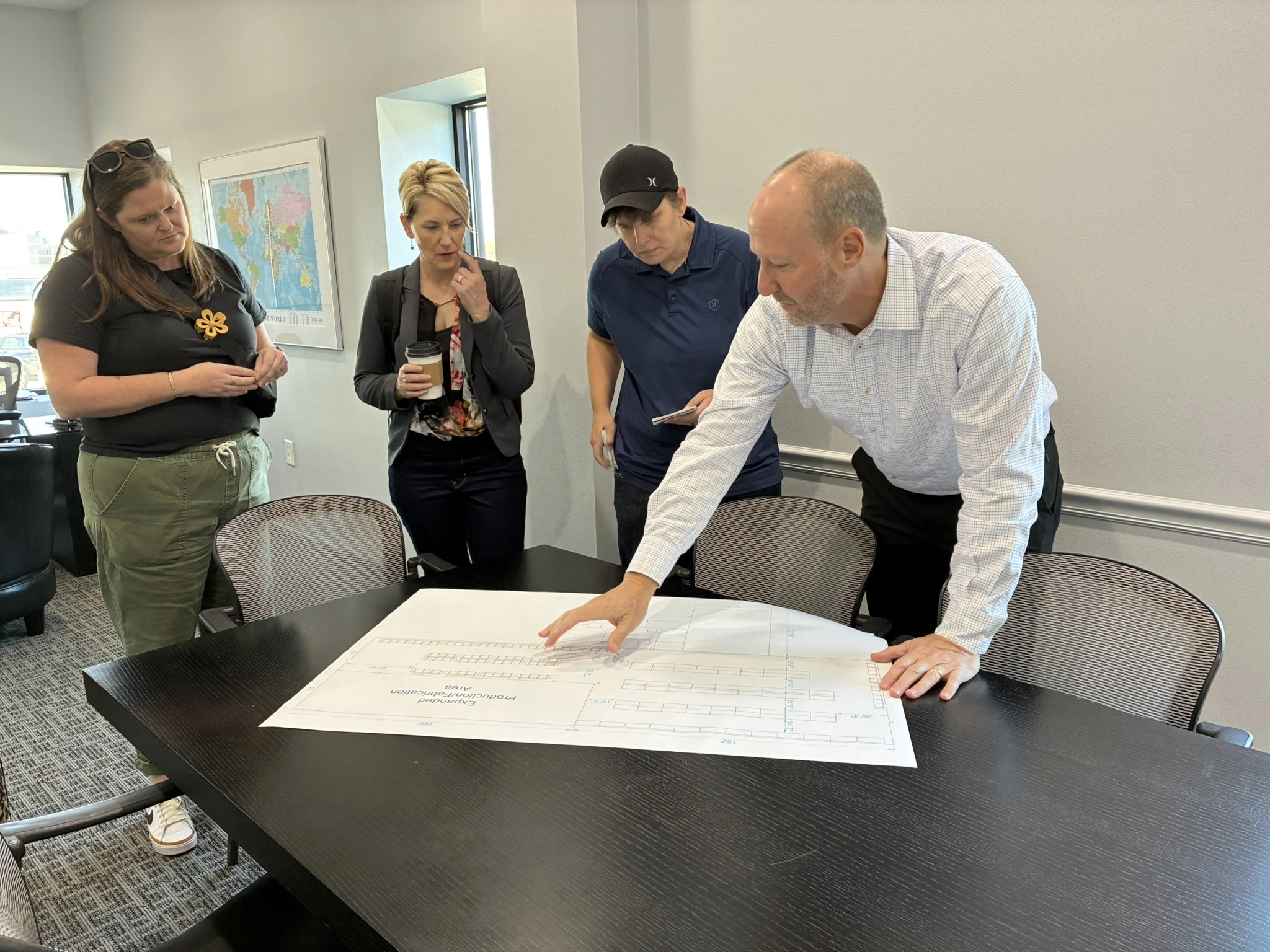
An accurate quantity takeoff is developed through careful interpretation of project documentation rather than simply counting products on a floor plan. Hospitality environments contain interconnected spaces that evolve throughout design, making every document an important part of understanding the complete procurement picture.
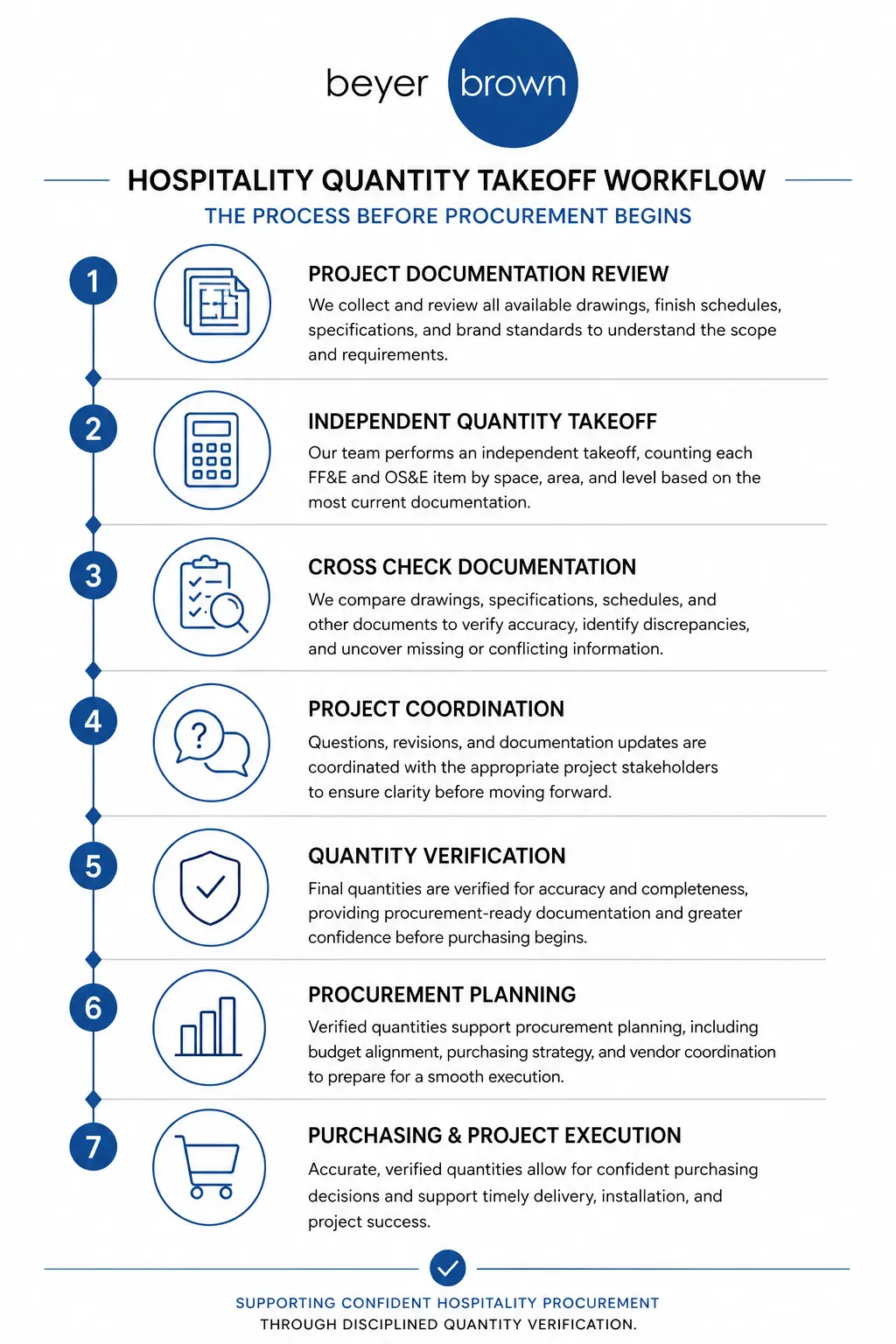
While every hospitality project presents its own complexities, a structured quantity takeoff process helps establish procurement ready quantities that reflect the project's current design intent. Reviewing documentation in a disciplined and consistent manner creates greater confidence before purchasing decisions are made.
Reviewing Construction Drawings for Hospitality Quantity Takeoffs
Construction drawings provide the foundation for the quantity takeoff process. Floor plans, reflected ceiling plans, furniture layouts, enlarged room details, and architectural elevations each contribute information about where products are required and how spaces are intended to function.
Rather than relying on a single sheet, documentation is reviewed collectively to understand the relationship between guestrooms, public spaces, restaurants, meeting venues, wellness amenities, and back of house operations. Hospitality projects often include multiple guestroom types and operational spaces, each with unique procurement requirements. Reviewing these environments together helps establish quantities that accurately reflect how the property is intended to operate.
Reading Finish Schedules and Material Information
Finish schedules provide another important layer of information by identifying the materials and finishes assigned to individual spaces.
Although finish schedules are not quantity documents themselves, they provide valuable context for procurement planning. Changes in flooring, wall finishes, millwork, or specialty materials can indicate design revisions that influence adjacent FF&E or OS&E requirements. Reviewing these schedules alongside project drawings helps create a more complete understanding of the finished environment.
Reviewing FF&E and OS&E Specifications
Specifications define the products intended for the project and provide details that may not appear within the drawings alone.
Furniture, fixtures, equipment, operating supplies, accessories, performance requirements, finishes, manufacturer standards, and product descriptions are often documented separately from the plans. Reviewing specifications alongside construction documents helps confirm that quantities reflect the products identified for procurement while identifying areas that may require clarification.
This coordinated review also helps maintain alignment between the project's design intent and procurement strategy.
Cross Checking Guestoom and Space Counts
Hospitality projects frequently include multiple room types, repeated floor plans, suites, accessible guestrooms, model rooms, and public spaces that share similar layouts while containing important differences. Cross checking room counts helps confirm that repeated floor plans, connecting rooms, specialty spaces, and unique room types are accurately reflected throughout the quantity takeoff.
This review also provides an opportunity to identify design revisions before they influence purchasing decisions. Even relatively small adjustments, such as adding guestrooms, modifying a meeting space, or expanding an amenity area, can affect procurement quantities across numerous product categories.
Confirming Approved Product Alternates
As projects evolve, products may be revised to accommodate owner preferences, value engineering decisions, or product availability.
Confirming approved alternates helps ensure quantity information remains aligned with the current design intent while reducing the likelihood that outdated information influences purchasing decisions later in the project.
Coordinating Project Documentation Revisions
Hospitality documentation continues to evolve throughout planning and construction. Drawing updates, revised specifications, owner comments, consultant coordination, and brand feedback can all affect procurement quantities.
Maintaining visibility into these revisions helps establish which documentation reflects the current design intent before procurement activities begin.
Independent Quantity Verification
After documentation has been reviewed collectively, quantity information is evaluated to identify inconsistencies, omissions, duplicate counts, or areas requiring clarification.
Depending on the project, quantity information may be developed through an independent takeoff or verified against quantities prepared by other members of the project team. Regardless of the approach, the objective remains the same: establishing reliable quantity information that accurately reflects the project's current design intent before purchasing begins.
This independent perspective provides another level of confidence while supporting informed procurement decisions.
Establishing Procurement Readiness
A quantity takeoff ultimately serves a much larger purpose than producing an accurate count.
Verified quantities create the foundation for procurement planning, purchasing strategies, budget refinement, vendor coordination, logistics planning, installation sequencing, and operational readiness.
This disciplined approach allows owners, developers, designers, operators, and procurement teams to work from a shared understanding of project requirements while reducing uncertainty before purchasing begins.
Project Impact of Accurate Hospitality Quantity Takeoffs
Accurate hospitality quantity takeoffs create value long before purchase orders are issued. They establish a stronger foundation for procurement decisions while giving owners, developers, designers, and operators greater confidence as projects move toward construction completion and opening. As quantity information becomes more reliable, procurement benefits from stronger coordination, greater visibility, and more informed decision making.
Greater Budget Confidence
Project budgets are only as reliable as the information used to develop them. Verified quantities create a stronger foundation for procurement planning by helping ensure purchasing decisions reflect the project's most current documentation.
As budgets evolve throughout a hospitality project, accurate quantity information reduces uncertainty and allows project teams to make financial decisions with greater confidence. It also gives ownership groups better visibility when evaluating procurement budgets, approving purchasing decisions, and monitoring project costs throughout the project lifecycle.
Better Purchasing Decisions
Effective procurement depends on understanding what needs to be purchased, when products are required, and how those purchases align with the overall project schedule.
Verified quantities help purchasing teams prioritize orders, improve coordination with manufacturers and suppliers, and reduce the likelihood of avoidable adjustments after procurement begins. This creates a more organized purchasing process while allowing project teams to remain focused on successful project delivery.
Fewer Requests for Clarification During Procurement
Questions are a natural part of every hospitality project, but unresolved quantity discrepancies often create unnecessary coordination during procurement.
Identifying inconsistencies early allows many questions to be resolved before purchasing begins, reducing interruptions and creating a more efficient procurement process for everyone involved.
Reduced Change Orders and Last Minute Adjustments
Design development continues throughout many hospitality projects, making some changes unavoidable. However, verifying quantities before procurement begins reduces the likelihood that preventable discrepancies will result in additional purchasing activity or unnecessary project changes later.
Resolving quantity discrepancies early also helps reduce the likelihood that products will need to be reordered, substituted, or expedited during procurement.
Improved Installation Sequencing
Successful installations depend on more than products arriving on site. Teams also need confidence that the correct quantities have been ordered for each guest room, public space, and operational area.
Accurate quantity information supports more efficient installation by reducing delays caused by missing, duplicated, or unexpected items while improving coordination as the project approaches completion.
More Predictable Procurement
Hospitality procurement requires coordinating manufacturers, suppliers, freight providers, warehouses, installers, and numerous project stakeholders over an extended timeline. Many of these activities occur simultaneously, making reliable quantity information essential for maintaining visibility across the project.
Verified quantities create a dependable foundation for purchasing decisions and ongoing coordination. Although change is a natural part of hospitality development, disciplined planning helps reduce avoidable uncertainty and allows project teams to respond more effectively as projects evolve.
This commitment to thoughtful planning reflects the broader value of hospitality procurement services, where visibility, coordination, and communication remain central throughout the project lifecycle.
Supporting Opening Readiness
Opening readiness depends on more than completing construction. Guestrooms, restaurants, meeting spaces, wellness amenities, and operational areas must all be furnished, equipped, and prepared to support the guest experience from the first day of operation.
Accurate quantity takeoffs contribute to that objective by helping ensure every space receives the products it requires before opening. When procurement is built on verified information, project teams can move into the final stages of construction with greater confidence that purchasing decisions remain aligned with the project's goals.
Ultimately, the value of an accurate quantity takeoff is measured not only by the numbers on a spreadsheet, but by the confidence it creates throughout the procurement process. Reliable quantity information supports better decisions, stronger coordination, and a more predictable path toward opening, allowing every stakeholder to move forward with greater clarity.

Building Confidence Through Accurate Quantity Takeoffs
Accurate hospitality quantity takeoffs are far more than a counting exercise. They establish the foundation that allows hospitality procurement to move forward with greater clarity, confidence, and coordination. Every verified quantity influences purchasing decisions, budget planning, project scheduling, installation sequencing, and ultimately the successful delivery of the finished property.
Hospitality projects are built on thousands of interconnected decisions, and each one depends on accurate information. Reviewing drawings, specifications, finish schedules, room counts, and project revisions through a disciplined verification process creates a shared understanding of procurement requirements before purchasing begins.
At Beyer Brown, quantity verification is approached as part of a broader procurement strategy focused on accuracy, coordination, and long term project success. Rather than viewing quantity takeoffs as an isolated task, they are integrated into a collaborative procurement approach that supports owners, developers, designers, operators, brands, and contractors throughout the project lifecycle.
As hospitality projects continue to grow in complexity, the value of accurate quantity takeoffs extends well beyond procurement. They strengthen budgets, improve communication, reduce risk, and create a more predictable path toward project completion. When procurement is built on verified information, project teams are better positioned to make informed decisions that contribute to a successful opening and a hospitality environment designed to perform as intended.
In hospitality procurement, confidence begins long before products are ordered. It begins with accurate information, thoughtful verification, and a disciplined procurement approach that creates alignment across the entire project team while supporting successful hospitality environments from planning through opening.