


FF&E procurement for restaurants requires purchasing decisions to keep pace with design development, operational planning, and construction. Seating layouts evolve, operators refine service requirements, and site conditions establish the dimensions furnishings must accommodate. Before orders are released, the team needs agreement on what is being purchased, how it will function, and which approvals are required for production.
A bar stool’s seat height must relate to the finished counter height, while a table’s top, base, and seating arrangement must work together. Upholstery needs to reflect the design intent and suit the operator’s maintenance practices. Unresolved requirements can leave a quotation looking complete while essential purchasing information is missing. Discovering those gaps after an order is placed can introduce additional costs, revised approvals, or production delays.
Beyer Brown helps project teams address these dependencies through specification review, quantity verification, budget analysis, and coordination with designers, operators, contractors, and vendors. That work continues through purchasing, production tracking, delivery, and installation coordination within the agreed scope, keeping approved decisions connected to the items ultimately received and placed into service.
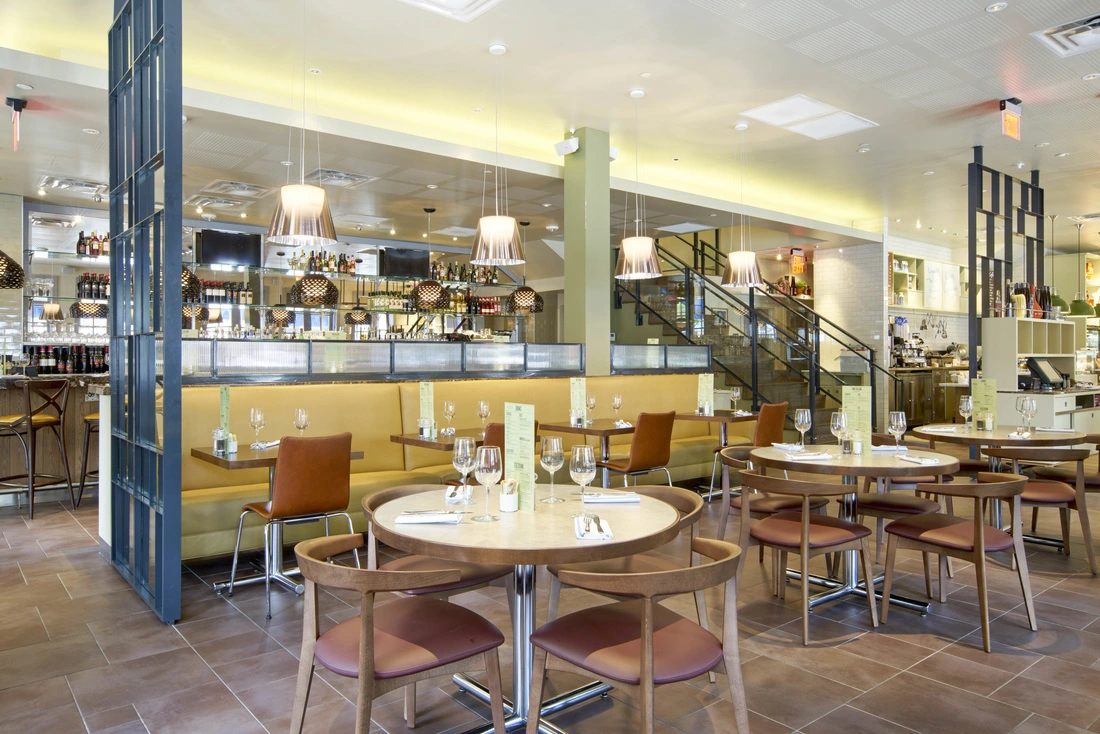
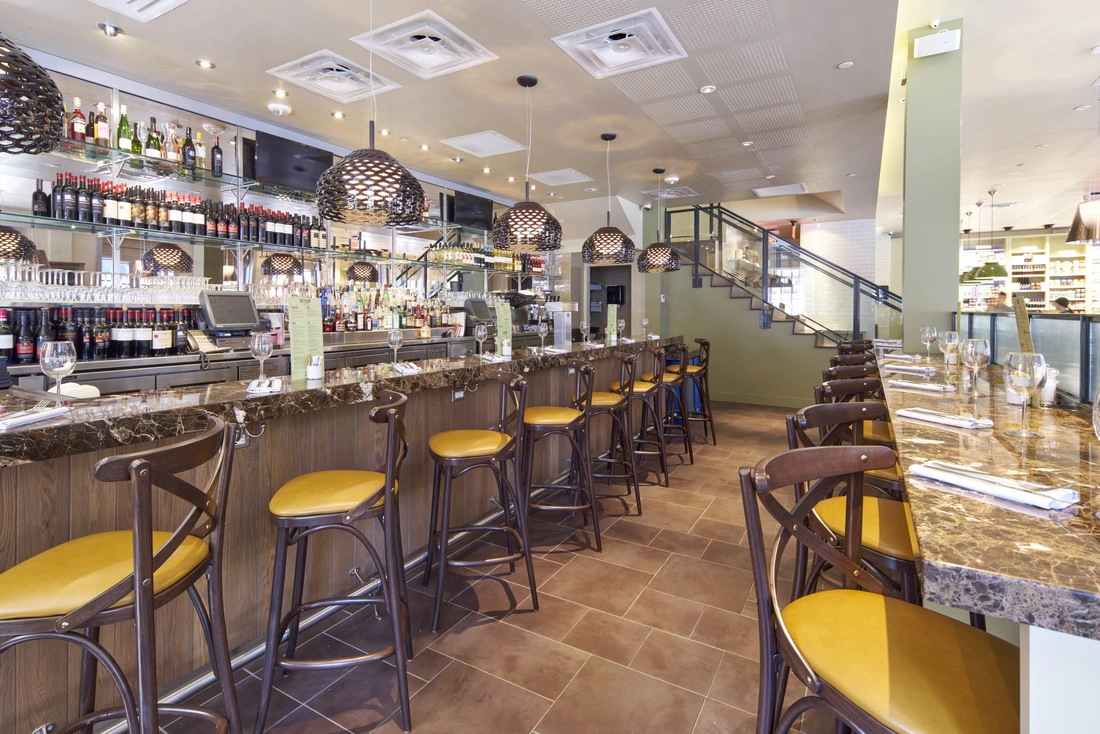
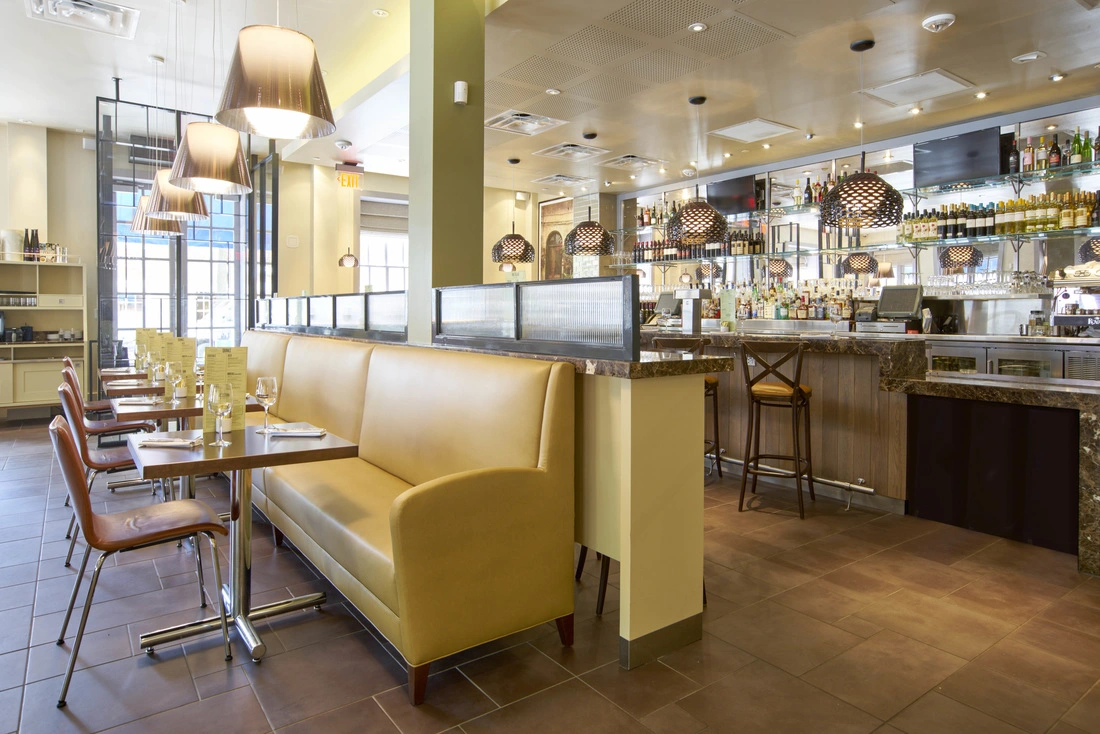
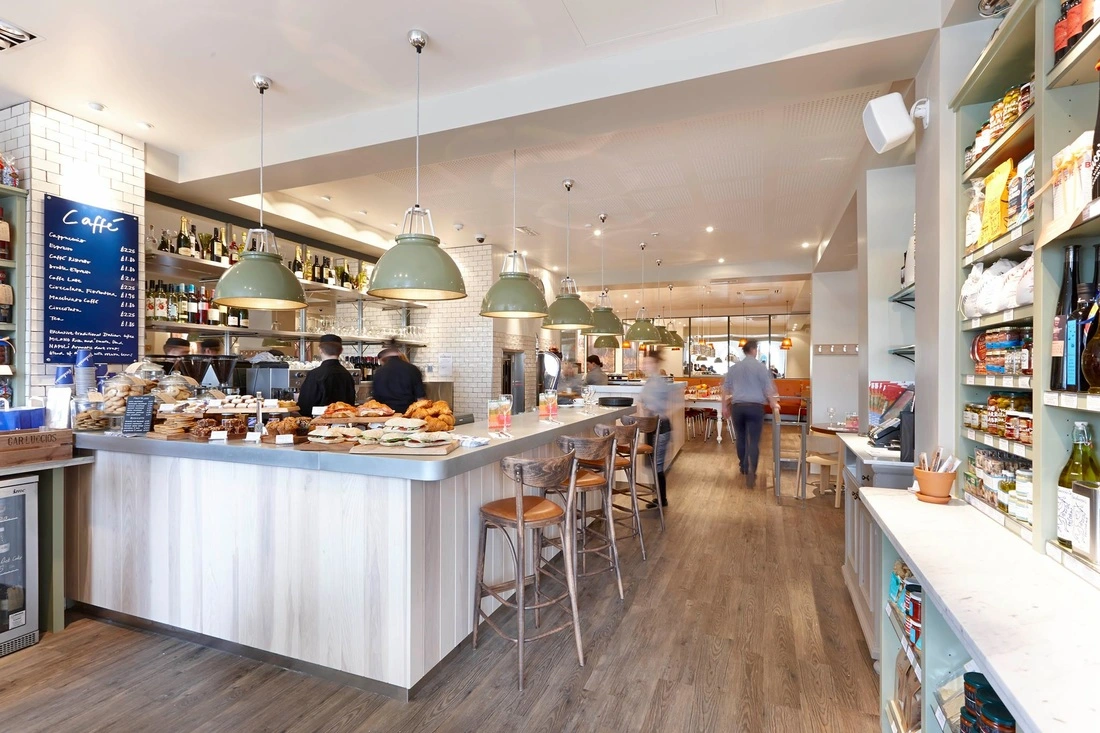
Carluccio’s Restaurant, featured among Beyer Brown’s food and beverage projects, illustrates these relationships. Its café counter, bar seating, upholstered banquettes, and freestanding tables provide a practical setting for examining how furniture, fixtures, and equipment support a complete dining environment.
Why Restaurant FF&E Decisions Matters to Owners and Developers
Restaurant furnishings affect how the approved dining concept performs in practice. Seating dimensions influence the layout, table configurations affect flexibility for different party sizes, and material selections shape maintenance requirements. For owners and developers, these decisions connect the capital investment to the operator’s ability to deliver the intended guest experience.
A proposed substitution deserves review against those relationships. A wider dining chair may reduce the purchase price while changing how many chairs fit comfortably around a table or how far they extend into a service aisle. Before approval, the designer and operator need to assess the dimensional differences against the current layout. Procurement brings the alternate’s specifications, cost, availability, and delivery implications into that review so ownership can evaluate the complete tradeoff.
Budget Exposure Extends Beyond the Product Price
A restaurant furniture quotation needs to be understood in terms of what it will take to deliver and install the specified item. Table tops and bases may be quoted separately, with assembly or mounting hardware excluded. Custom seating may require fabric purchased through another supplier, along with additional yardage or material handling charges. These distinctions can materially change the cost of an otherwise comparable proposal.
Beyer Brown’s preliminary budgeting helps establish early alignment between the furnishing scope and ownership’s financial expectations. As specifications and vendor pricing develop, budget reviews need to distinguish estimated allowances, current quotations, and approved purchasing commitments. Freight, receiving, storage, installation, and applicable taxes also need to be identified, with exclusions and unresolved costs visible before expenditure is authorized.
That visibility becomes particularly valuable when construction milestones change. Furniture completed ahead of site readiness may require storage and additional handling. An accelerated installation may require split shipments or a revised delivery sequence. Ownership needs to understand these consequences while options remain available, supported by procurement’s coordination with vendors, freight providers, and the project team.
An Opening Date Depends on Usable Spaces
A shipment confirmation provides only one part of the readiness picture. Tables delivered without their bases cannot be set for service. Seating received before flooring is complete may need to remain in storage. An installed bar may still require furnishings, operating supplies, or outstanding trade work before staff can begin preparation.
Beyer Brown’s coordination across purchasing, production tracking, logistics, and installation helps keep these dependencies visible within the agreed scope. Progress reporting should show which items are approved, released, in production, shipped, received, and awaiting placement, with outstanding issues connected to the areas they affect. This gives ownership and the operator a clearer understanding of furnishing readiness alongside the contractor’s construction updates.
How Beyer Brown Helps Align Design, Purchasing, and Operations
Beyer Brown’s procurement for restaurants and food and beverage venues helps translate design selections and operational requirements into coordinated purchasing commitments. The work involves reconciling specifications, quantities, pricing, approvals, and delivery requirements so vendors receive clear instructions and the project team understands what remains unresolved before an order proceeds.
Clear approval authority keeps this work moving. Ownership or its designated representative authorizes expenditure, designers review selections and alternatives, and operators establish service and maintenance requirements. Procurement carries their approved direction into vendor documentation, while architects, engineers, contractors, and specialist consultants retain responsibility for their respective disciplines.
Defining What Each Purchasing Package Includes
Restaurant projects often divide related components among several contracts. A banquette may be supplied by a furniture manufacturer or fabricated as part of the millwork package. Decorative lighting may be purchased through procurement, with installation assigned to the electrical contractor. Commercial kitchen equipment and signage may sit within separate specialist packages while still requiring coordination with furnishings and service areas.
The scope needs to identify both the item being supplied and the work required to put it into use. For a banquette, responsibilities may include field measurements, shop drawing approvals, upholstery, delivery, assembly, and anchoring. Confirming these assignments before purchasing helps reveal exclusions while there is still time to resolve them before installation.
Within its agreed purchasing scope, Beyer Brown helps reconcile vendor inclusions and exclusions with the project team’s assigned responsibilities. Questions about dimensions, installation requirements, or components supplied by others need a documented answer that can be reflected in the quotation and subsequent order. Ownership then has a clearer basis for understanding what the approved expenditure covers.
Operating supplies and equipment require the same attention to scope, supported by direct operator input. Glassware, flatware, and service pieces depend on the menu, service format, anticipated demand, washing capacity, and available storage. Quantities cannot be established reliably from the dining seat count alone.
Beyer Brown’s OS&E purchasing services support sourcing and purchasing against the agreed requirements, with delivery coordinated around the operator’s preparation schedule. Furniture installation and OS&E readiness need to be considered together so staff have the furnishings and service items required for setup and training.
Making Specifications Ready for Vendor Commitments
A design selection becomes ready for purchasing when the documentation gives the vendor a sufficiently complete basis to price and supply it. For restaurant seating, that can include dimensions, frame finish, upholstery manufacturer and reference, material placement, glides, and assembly requirements. Custom furnishings may also require approved shop drawings, finish samples, or confirmation of dimensions that depend on completed site work.
Beyer Brown’s specification assistance helps resolve gaps before vendors make manufacturing assumptions. Where upholstery is supplied separately, the furniture manufacturer may need to confirm yardage, material suitability, shipping instructions, and the required fabric arrival date. An approved chair can still face production delays if its upholstery has not been ordered or accepted by the manufacturer.
Operational requirements also need supporting information. Cleaning compatibility should be reviewed against manufacturer guidance and the operator’s intended maintenance practices. Proposed alternatives require design and operational review where dimensions, construction, or materials differ, even when their appearance closely resembles the original selection.
How FF&E Procurement for Restaurants Progresses Through Execution
FF&E procurement for restaurants depends on carrying current approvals through each stage of execution. A revised layout must reach the quantity review, an approved finish must appear in the order, and a change in site readiness must inform the delivery plan. Beyer Brown helps coordinate that information across purchasing, production, logistics, and installation.
Confirm Quantities Against the Current Layout
Restaurant furniture counts need to be verified by specification and location. Similar seating may have different heights, finishes, or upholstery depending on its placement. A revised plan can redistribute those items without changing the total seat count, leaving an apparently reasonable purchasing summary that no longer reflects the room.
Beyer Brown’s takeoff and quantity verification helps reconcile furniture schedules with current drawings and identify discrepancies before orders are released. The review should distinguish installed quantities from approved spares and confirm which drawing revisions form the purchasing basis. Changes made after verification need to be assessed against orders already placed, including any resulting cancellation, modification, or additional freight costs.
Quantity verification also provides an opportunity to raise apparent layout conflicts for resolution. Accessibility, egress, and permitted capacity remain subject to review by the responsible design professionals and authorities; confirming the purchasing count does not establish approval of the seating arrangement.
Compare Quotations on a Consistent Basis
Vendor quotations need to reflect the same purchasing requirements before their prices can be meaningfully compared. Differences in dimensions, construction, upholstery, freight terms, or assembly obligations should be identified alongside exclusions and proposed substitutions. Otherwise, ownership may be comparing a complete furnishing package with a price that leaves essential components or services unresolved.
Samples and mockups can help designers and operators assess seat comfort, finish appearance, and the relationship between adjacent pieces. Approvals should identify the sample or drawing revision accepted, required corrections, and authorization to proceed. Beyer Brown helps carry that direction into purchasing documentation and vendor follow-up.
Release Orders With Their Approval Dependencies Understood
A quoted lead time needs to be read alongside the conditions that start it. Production may depend on receipt of a deposit, approved shop drawings, accepted upholstery, or confirmation of final dimensions. An issued purchase order can therefore represent an authorized expenditure while the manufacturing schedule remains conditional.
Beyer Brown’s purchasing and production coordination helps keep these requirements visible. Purchase orders need to reflect approved specifications, quantities, pricing, delivery requirements, and applicable terms, while vendor acknowledgments need to be checked for discrepancies. A different finish reference, omitted component, or revised delivery term is easier to address before it becomes part of a manufactured shipment.
Changes after release require confirmation from the vendor as well as approval within the project team. A revised instruction may affect materials already purchased, work in progress, price, or production timing. Written acceptance of the change gives ownership a clearer record of the revised commitment and prevents an internal approval from being mistaken for a change the manufacturer has accepted.
Coordinate Production, Freight, and Site Readiness
Production completion, shipment, receipt, and installation each require separate confirmation. Furniture that is ready at the factory may still need freight arrangements or consolidation. Goods received at a warehouse may need inspection and storage before the contractor can release the dining area for installation. Tracking these milestones separately gives the team a more useful picture than a single anticipated delivery date.
Beyer Brown’s coordination with vendors, freight providers, and installation teams helps connect product availability to the project’s receiving and placement requirements. Delivery planning needs to account for site access, unloading arrangements, staging space, and the sequence in which areas become available. Large or assembled furnishings may also require route reviews using confirmed product and packaging dimensions.
Receiving records should identify shortages, visible damage, and discrepancies against the order so the responsible parties can pursue correction promptly. During installation, outstanding components and placement issues need to remain connected to the relevant item and location. Within the agreed scope, procurement follow-through helps ownership understand what has arrived, what is usable, and which vendor actions remain necessary to complete the furnishing package.
What Carluccio's Illustrates About Project Impact
At Carluccio’s, the café, retail displays, bar, and dining areas contribute to one restaurant experience. Each setting has distinct furnishing requirements, yet the finished environment depends on their coordination. Projects with this combination of uses require attention to both individual purchasing packages and the relationships between them.
The café counter illustrates how closely furnishings relate to service. Stool dimensions and placement need to accommodate the finished counter, while the arrangement must be considered alongside customer movement and access to adjacent displays. In the dining areas, table positions need to work with banquette seating and loose chairs. Decisions about individual products therefore require an understanding of the complete setting in which they will be used.
As installation approaches completion, ownership and the operator need an accurate account of the furnishing package’s condition and outstanding requirements. Delivered quantities should be reconciled with the orders, discrepancies assigned for follow-up, and available care and warranty documentation organized for handover. This information helps the operator understand both what is ready for use and what still requires attention.
A damaged chair or missing table component can affect how an area is prepared for service, even when most furnishings are in place. Within the agreed scope, Beyer Brown’s deficiency coordination helps connect each issue to the relevant vendor, required correction, and anticipated resolution. The operator can then assess the effect on setup and service preparation with a clearer understanding of the remaining work.
A Procurement Partnership That Supports the Restaurant Beyond Opening
The value of FF&E procurement for restaurants lies in how well approved decisions hold together through execution. Ownership needs visibility into commitments, designers need purchasing documents that reflect approved selections, and operators need suitable furnishings and service items with clear information about anything outstanding at handover.
Beyer Brown’s FF&E procurement services support that shared accountability through budgeting, specification assistance, quantity verification, purchasing, production tracking, and delivery and installation coordination within the agreed scope. Keeping these activities connected helps the team evaluate changes with an understanding of their consequences for the complete furnishing package.
The effects of those decisions continue into daily service. Material suitability, maintenance requirements, replacement information, and the compatibility of furnishings all influence how the operator cares for the investment. Thoughtful procurement carries these considerations into purchasing and handover, while the people responsible for design, expenditure, and operations can still provide direction.
For restaurant owners and developers, a dependable procurement partnership provides a consistent basis for making decisions and following them through. Its strategic contribution is a clearer path between the approved dining concept and a furnished environment prepared to support guests, staff, and the business behind it.