



OS&E Purchasing Challenges can have a significant impact on hotel openings and renovation projects when procurement planning, operational requirements, and project schedules are not fully aligned.
While furniture, fixtures, and equipment often receive significant attention during hospitality development, operating supplies and equipment play an equally important role in opening readiness. Guest rooms may be furnished, public spaces may be complete, and construction may be nearing completion, but a hotel cannot operate successfully until the thousands of operational items required for daily service are properly sourced, delivered, organized, and installed.
OS&E encompasses a broad range of products that support hotel operations, including guest room accessories, housekeeping supplies, food and beverage smallwares, kitchen equipment, uniforms, technology accessories, back of house materials, and countless other items that contribute to the guest experience.
Unlike many FF&E purchases, OS&E procurement often occurs closer to opening dates and operational milestones. This creates unique purchasing challenges that require careful coordination among ownership groups, operators, designers, vendors, and project teams.
When OS&E purchasing lacks structure, projects can experience budget uncertainty, delivery complications, installation delays, and operational readiness concerns. Conversely, a disciplined procurement strategy creates visibility, supports decision making, and helps hospitality teams navigate complexity with greater confidence.
For hospitality stakeholders, successful openings and renovations depend on more than construction progress. Operational readiness requires careful planning, purchasing coordination, and visibility across hundreds of decisions that must come together at the right time. OS&E procurement plays a central role in helping teams navigate that complexity while supporting budget, schedule, and operational objectives.
Why OS&E Purchasing Challenges Matter to Owners, Developers, and Operators
Hospitality projects involve hundreds of moving parts, but opening readiness ultimately depends on the successful coordination of thousands of individual details.
For owners, developers, operators, and asset managers, OS&E purchasing represents far more than the acquisition of operational supplies. It directly influences a property's ability to open on schedule, maintain service standards, and support guest expectations from the first day of operation.
Opening Readiness Depends on Operational Preparedness
Every department within a hotel relies on operational supplies to function effectively.
Guest rooms require accessories, amenities, and operational items that support comfort and convenience. Housekeeping teams need carts, cleaning equipment, linens, and storage solutions. Food and beverage operations depend on kitchen equipment, smallwares, serving pieces, and inventory management systems. Front office teams require technology accessories, office supplies, and operational tools that support guest service.

While these items may seem smaller in scale than major FF&E purchases, they collectively represent a substantial portion of opening readiness.
If critical OS&E items are delayed, unavailable, or improperly coordinated, operational teams may face challenges preparing for opening day regardless of construction progress.
Delays Can Affect Multiple Project Functions
OS&E purchasing challenges often create ripple effects throughout a project.
A delayed delivery may impact staff training schedules. Missing operational supplies may affect department setup and testing. Last minute purchasing decisions may create additional administrative burdens and compress already demanding project timelines.
Hospitality openings require careful sequencing across numerous teams. When operational readiness activities become compressed, project stakeholders may have less time to address unforeseen issues before guests arrive.
Maintaining visibility throughout the purchasing process helps reduce these risks and supports smoother project execution.
Budget Visibility Remains Essential
OS&E budgets frequently evolve as projects progress.
Changes in room counts, operational requirements, brand standards, specifications, and project scope can influence purchasing needs. Market conditions, freight costs, storage considerations, and inventory requirements may also affect overall project costs.
Without a structured procurement process, it can become more difficult for stakeholders to understand budget status and make informed decisions.
Owners and developers benefit from clear reporting, ongoing cost visibility, and disciplined purchasing strategies that support both financial oversight and project objectives.
How Strategic Hospitality Procurement Helps Address OS&E Challenges
The complexity of OS&E procurement often extends beyond purchasing products.
Successful hospitality procurement requires coordination, planning, communication, and visibility across multiple project stakeholders. A structured procurement approach helps create alignment while reducing uncertainty throughout project execution.
Procurement Creates Structure
One of the most effective ways to address OS&E purchasing challenges is through early planning and disciplined coordination.
Procurement teams help establish purchasing schedules, validate requirements, organize specifications, verify quantities, and identify potential risks before they become larger project concerns.
This structured approach supports informed decision making while helping teams maintain greater control over budgets and timelines.
It also helps create consistency across project teams by establishing clear expectations, responsibilities, and reporting processes. When stakeholders have access to reliable information, coordination becomes more efficient and decision making becomes more confident.
Rather than reacting to challenges as they arise, stakeholders gain visibility that allows them to plan proactively and make adjustments with confidence.
Procurement Connects Stakeholders
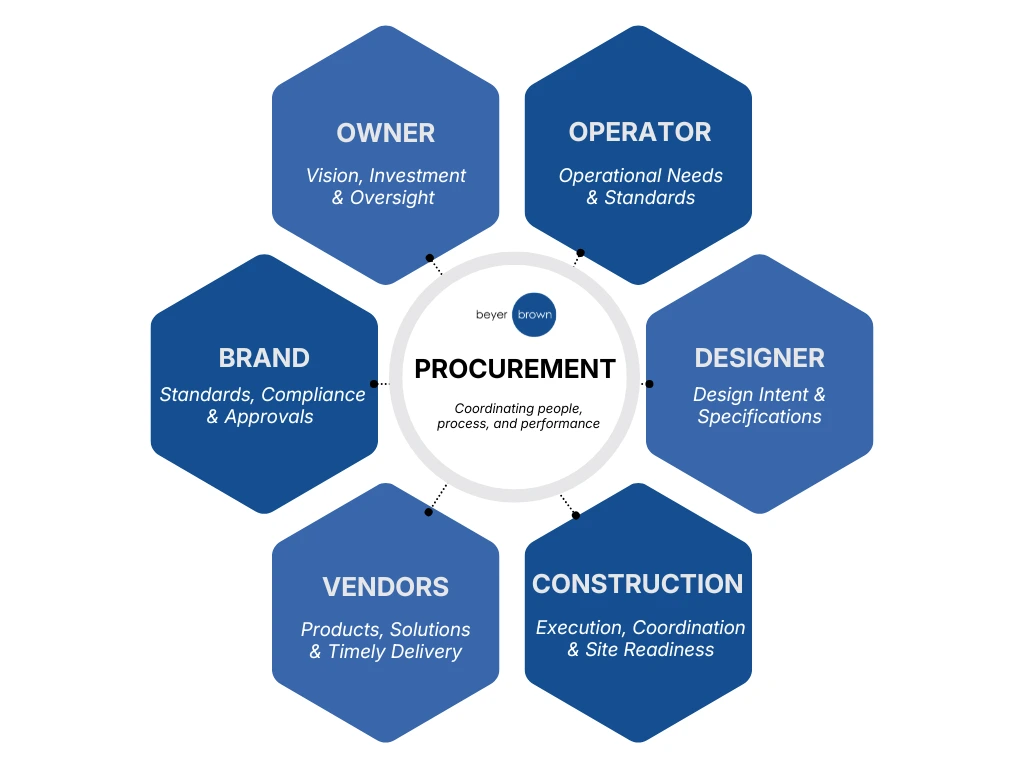
Hospitality projects require collaboration among numerous participants.
Ownership groups, operators, designers, brand representatives, vendors, consultants, and construction teams each contribute valuable perspectives and project requirements.
Procurement serves as an important point of coordination among these stakeholders by helping align purchasing activities with operational objectives and project milestones.
This alignment supports consistent communication and reduces the likelihood of misunderstandings that can create delays or additional costs.
Organizations providing hospitality procurement services often play a key role in maintaining visibility and accountability throughout this process.
Visibility Supports Better Decision Making
One of the greatest advantages of structured procurement is improved visibility.
Regular reporting, purchasing schedules, lead time tracking, budget monitoring, and issue management help project teams understand current conditions and make informed decisions.
When stakeholders have access to reliable information, they are better positioned to address challenges early, prioritize resources, and maintain alignment with project goals.
This level of transparency creates confidence throughout the project lifecycle and supports more predictable outcomes.
Understanding the OS&E Procurement Process During Hotel Openings and Renovations
Although every hospitality project is unique, successful OS&E procurement typically follows a structured process designed to support operational readiness and project coordination.
Step 1: Operational Scope Development
The process begins with understanding operational requirements.
This includes reviewing project goals, brand standards, operational needs, design intent, and departmental requirements.
Stakeholders work together to identify the products and equipment necessary to support daily operations while maintaining consistency with the property's overall vision.
A well defined scope establishes the foundation for accurate budgeting, purchasing, and project planning.
Step 2: Quantity Verification
After requirements are established, quantities must be carefully reviewed and validated.
This process includes evaluating guest room counts, public areas, food and beverage operations, meeting spaces, housekeeping requirements, and back of house functions.
Accurate quantity verification helps reduce purchasing errors while supporting more reliable budget forecasting.
It also provides an opportunity to identify potential adjustments before purchasing activities begin.
Step 3: Vendor Sourcing and Purchasing
Once requirements and quantities are confirmed, procurement teams begin supplier engagement and purchasing activities.
This phase may include sourcing products, evaluating pricing, reviewing specifications, negotiating purchasing terms, issuing purchase orders, and coordinating production schedules.
Vendor selection often requires balancing quality, availability, lead times, operational requirements, and budget considerations.
Careful oversight during this phase helps support consistency and purchasing accuracy.
Step 4: Logistics Coordination
Logistics management represents one of the most important aspects of OS&E procurement.
Production schedules, shipping timelines, warehousing requirements, receiving coordination, inventory tracking, and delivery sequencing all contribute to successful project execution.
Even relatively small disruptions can affect downstream project activities if not identified and managed appropriately.
Maintaining visibility throughout the logistics process helps teams anticipate challenges and make informed adjustments when necessary.
Logistics planning becomes particularly important during hotel openings and phased renovations where delivery timing must align with construction progress, operational requirements, and installation schedules. Careful coordination helps reduce disruption, supports sequencing efforts, and ensures critical items arrive when they are needed most.

Step 5: Installation and Opening Readiness
As project completion approaches, OS&E deliveries must be coordinated with installation schedules and operational readiness activities.
Items are received, organized, inventoried, distributed, and prepared for departmental use.
Operational teams begin training, testing, and setup activities while confirming that required supplies and equipment are available when needed.
Successful execution during this phase depends heavily on the planning and coordination established earlier in the procurement process.
By the time guests arrive, thousands of operational details must work together seamlessly to support the overall hospitality experience.

Project Impact: How Structured OS&E Procurement Supports Successful Hospitality Projects
When OS&E procurement is approached strategically, the benefits extend well beyond purchasing activities. The value of a structured procurement process becomes most visible as projects move closer to opening readiness and operational launch.
A coordinated procurement process helps create stronger project outcomes across multiple areas of hospitality development.
Better Schedule Alignment
Visibility into purchasing schedules, production timelines, shipping milestones, and installation requirements helps support project planning.
Teams gain a clearer understanding of dependencies and can coordinate activities more effectively throughout the project lifecycle.
This alignment helps reduce uncertainty and supports smoother transitions into opening readiness.
Improved Budget Confidence
Structured procurement processes provide greater visibility into project costs. Similar planning principles can also strengthen preliminary budgeting efforts during earlier phases of hospitality development.
Stakeholders can monitor expenditures, evaluate changes, review forecasts, and make decisions using accurate information.
This level of financial clarity supports accountability while helping owners and developers maintain confidence in project planning.
Reduced Operational Risk
Operational readiness depends on having the right products available at the right time.
Coordinated procurement efforts help reduce the likelihood of shortages, purchasing gaps, and last minute adjustments that may affect opening activities.
By identifying potential issues early, teams can respond proactively rather than reactively.
Stronger Cross Functional Coordination
Hospitality projects require collaboration among numerous disciplines.
Procurement often serves as a connecting point between design, operations, ownership, construction, and vendor partners.
This coordination helps create alignment across project objectives while supporting more consistent communication throughout execution.
The result is a more structured project environment that promotes clarity, accountability, and confidence.
Thoughtful Procurement Supports Successful Openings
OS&E procurement involves far more than purchasing operational supplies.
It is a coordinated process that helps align operational requirements, project schedules, budgets, vendors, logistics activities, and stakeholder expectations throughout the hospitality project lifecycle.
The most common OS&E Purchasing Challenges often emerge when visibility, planning, and coordination occur too late in the process. As project complexity increases, the need for disciplined procurement oversight becomes even more important. Similar principles can be seen in early project planning activities such as Hotel PIP Analysis, where visibility and prioritization help teams make informed investment decisions.
For owners, developers, operators, and hospitality stakeholders, structured procurement provides greater confidence throughout project execution. It supports opening readiness, strengthens budget visibility, improves coordination, and helps teams navigate uncertainty with greater clarity.
At Beyer Brown, procurement is approached as part of a larger hospitality project strategy. By combining hospitality specialization, procurement expertise, and lifecycle execution experience, project teams gain the visibility and structure needed to support successful openings and renovations.
The value extends beyond purchasing.
It helps create the conditions for smoother execution, stronger operational readiness, and more confident project outcomes. For hospitality teams managing complex openings and renovations, thoughtful procurement provides more than purchasing support. It creates alignment across stakeholders, improves visibility throughout execution, and helps projects move forward with greater clarity and confidence.