



The Industry Challenge
On time openings in hospitality depend on consistent coordination across every phase of a project. While delays are often attributed to a single issue, they typically develop through a series of misalignments that build over time.
OS&E purchasing is one of the most overlooked contributors to this challenge.
Unlike FF&E, which is often planned earlier, OS&E purchasing is frequently addressed later in the timeline. This creates gaps between procurement, logistics, and installation. Without coordination, teams begin making purchasing decisions without full visibility into lead times, delivery sequencing, and operational requirements.
As these gaps grow, projects experience rushed installations, incomplete setups, and avoidable delays that impact opening readiness. What begins as a minor misalignment in purchasing can evolve into broader challenges that affect multiple areas of the project at once.
For owners and developers, these delays extend beyond scheduling. Opening dates are closely tied to revenue forecasts, brand commitments, and operational planning. Even small disruptions in OS&E delivery can create downstream effects that impact staffing readiness, guest experience, and overall project performance.
Coordinated OS&E purchasing supports on time openings by aligning procurement decisions with project timelines, installation flow, and operational needs. It introduces structure into a phase that is often reactive, allowing teams to move forward with clarity and confidence.
Why Coordinated OS&E Purchasing Matters for On Time Openings
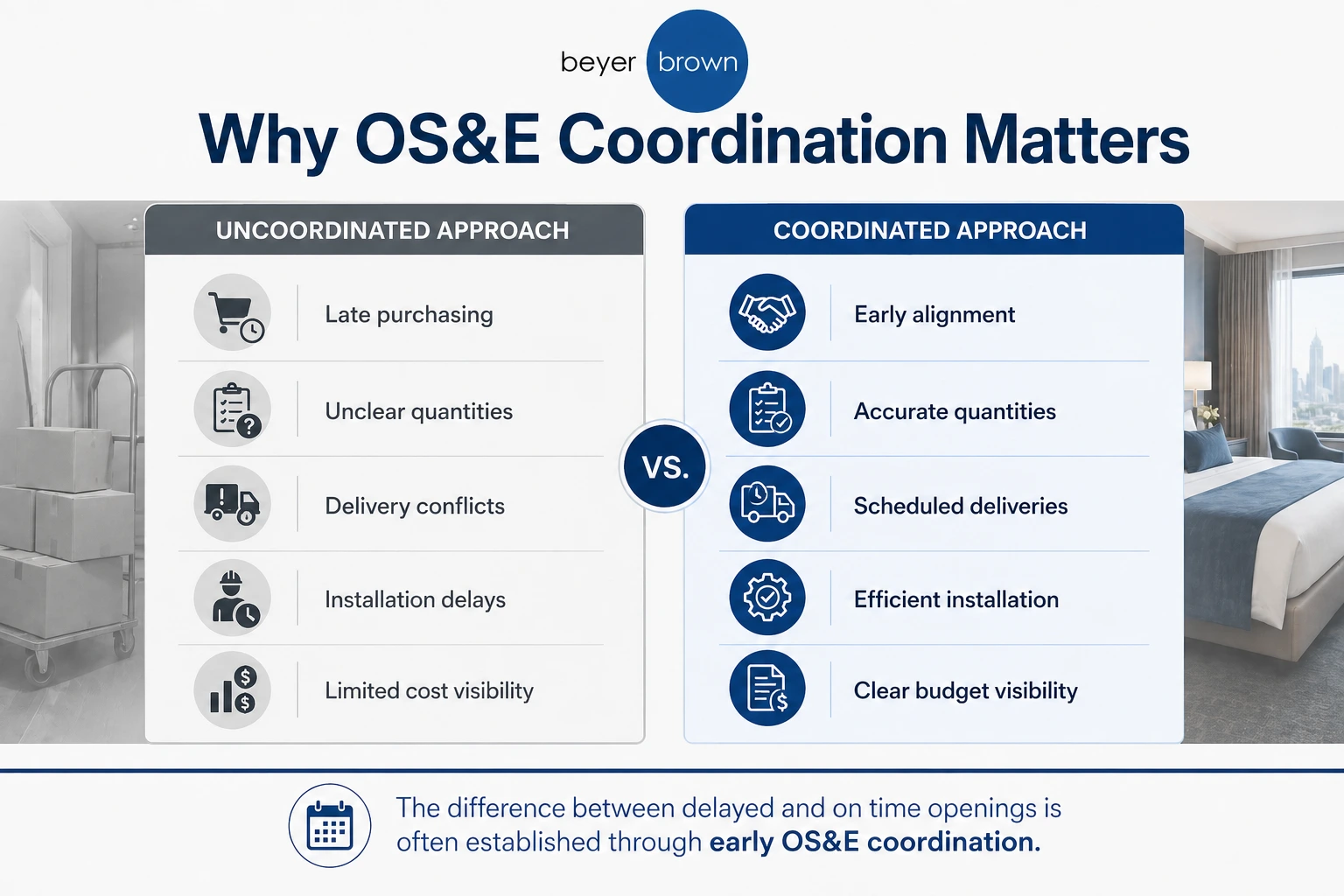
For owners and developers, an on time opening is not just a milestone. It directly impacts revenue, brand perception, and operational readiness.
Coordinated OS&E purchasing plays a central role in achieving that outcome.
Lead Time Visibility and Scheduling Alignment
OS&E purchasing involves multiple vendors, each operating on different production schedules. Without early coordination, lead times can conflict with installation timelines.
When purchasing is aligned early, teams gain visibility into delivery windows and can plan accordingly. This reduces the likelihood of late arrivals that delay installation.
It also allows project teams to make informed decisions earlier in the process. When lead times are clearly understood, adjustments can be made proactively rather than reactively, protecting both schedule and budget.
Quantity Accuracy and Installation Readiness
Accurate quantities are essential for on time openings.
Without structured verification, teams risk shortages that delay installation or over ordering that creates logistical challenges. Coordinating with TakeOff & Quantity Verifications ensures that purchasing aligns with actual project requirements.
This supports smoother installation and reduces disruptions during final project phases. It also minimizes the need for last minute sourcing, which often comes with increased costs and limited availability.
Budget Alignment and Decision Clarity
OS&E purchasing decisions are closely tied to budget performance.
When coordination is missing, cost visibility is limited and approvals become more difficult. Aligning purchasing with Preliminary Budgeting allows teams to evaluate costs early and make informed decisions that support both scope and timeline.
This level of clarity is especially important during approval phases. When stakeholders have confidence in both scope and cost, decisions can be made more efficiently, reducing delays and maintaining project momentum.
Installation Sequencing and Site Coordination
On time openings depend on precise installation sequencing.
Coordinated OS&E purchasing ensures that items arrive in the correct order and at the right time. This avoids site congestion, reduces rehandling, and supports efficient turnover of spaces.
Without this coordination, even fully delivered items can create challenges if they arrive out of sequence. Proper timing ensures that installation teams can work efficiently without interruption.
Revenue Protection and Operational Readiness
For owners, delays at opening are not only logistical challenges. They are financial and operational risks.
An incomplete OS&E installation can delay room readiness, impact staff training timelines, and create a fragmented guest experience at launch. Coordinated purchasing helps ensure that all operational elements are in place when they are needed, supporting a smoother transition into active operations.
For owners, this level of coordination creates predictability. It reduces last minute risk and supports a more controlled path to opening.
How Beyer Brown Supports Coordinated OS&E Purchasing
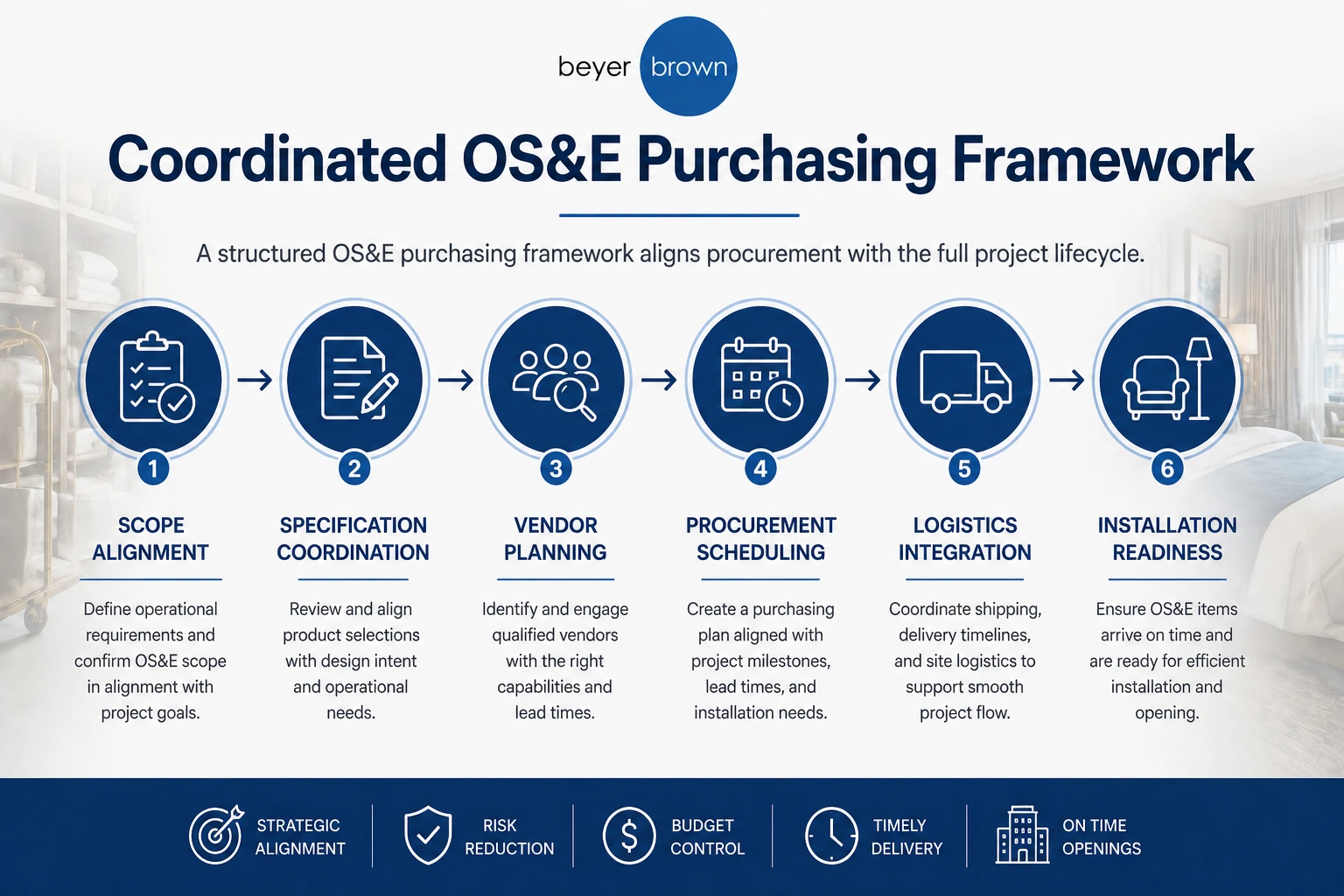
Coordinated OS&E purchasing requires a structured procurement approach that aligns with the full project lifecycle.
Beyer Brown integrates OS&E purchasing into a broader procurement strategy that connects early planning, vendor coordination, logistics, and installation.
Early Alignment and Scope Definition
The process begins with defining OS&E scope in alignment with project requirements.
Through coordination with Specification Assistance, product selections are reviewed to ensure they support both operational needs and design intent. This reduces uncertainty before purchasing begins.
Early clarity in scope helps prevent late stage changes that can disrupt procurement timelines and create unnecessary pressure on the project.
Structured Procurement Planning
Procurement planning is developed based on vendor lead times and project milestones.
Orders are scheduled to align with installation timelines, supporting on time openings rather than reacting to delays. This structured approach allows teams to maintain control over purchasing decisions and avoid compressed timelines later in the project.
Vendor Coordination and Order Management
OS&E purchasing often involves multiple suppliers.
A coordinated approach ensures that vendors are aligned with delivery expectations, production timelines, and project sequencing. This creates consistency across all purchasing activities and reduces variability that can impact project execution.
Clear communication with vendors also allows for better tracking and early identification of potential delays.
Integrated Logistics and Delivery Planning
Logistics is integrated into procurement rather than treated as a separate step.
Through alignment with FF&E Procurement Services, shipments are scheduled to support installation flow. This reduces congestion and supports efficient execution on site.
This level of coordination ensures that deliveries are not only on time, but also properly sequenced to match installation needs.
Warehouse Coordination and Installation Readiness
Receiving and staging processes are structured to align with project timelines.
Items are inspected, organized, and prepared for installation, ensuring that materials are available when needed without creating unnecessary storage challenges.
This step adds an additional layer of control, helping to identify any issues before items reach the site and ensuring that installation teams can work efficiently.
Continuous Visibility and Communication
Consistent communication provides visibility into order status, delivery schedules, and potential risks.
This allows teams to make informed decisions and maintain alignment throughout the project. It also creates confidence among stakeholders, as they have clear insight into how procurement is progressing.
For owners and developers, this structured approach translates into greater control and reduced uncertainty.
Decisions are supported by accurate information. Timelines are protected through early planning and coordination. Installation progresses with fewer disruptions, and opening readiness is achieved with greater confidence.
Rather than reacting to challenges as they arise, teams are able to move forward with a clear and coordinated plan.
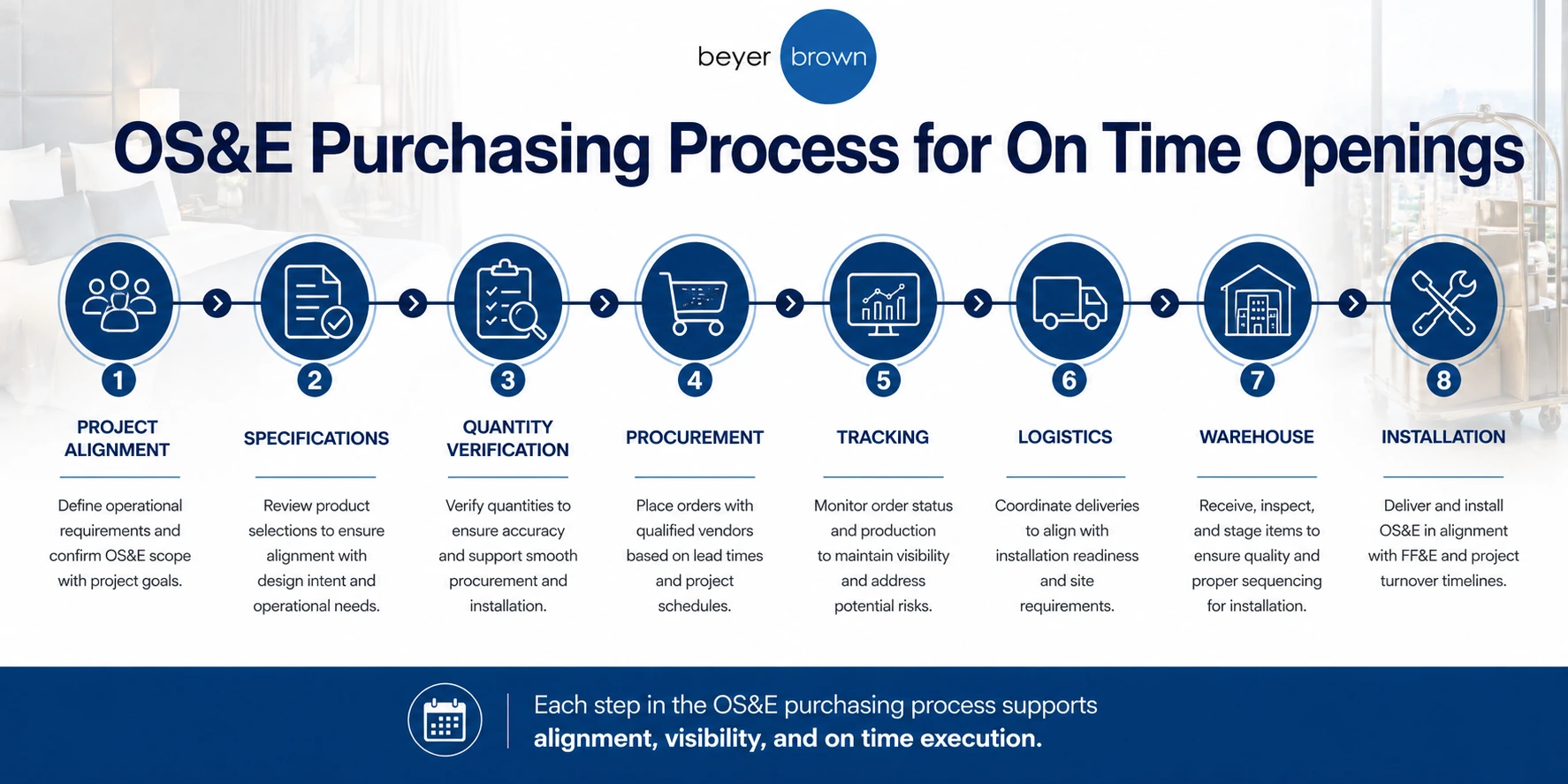
The Coordinated OS&E Purchasing Process
A structured OS&E purchasing process supports clarity and consistency across every stage of the project.
Step 1: Project Alignment
Operational requirements are defined and scope is confirmed, ensuring all necessary OS&E items are identified early.
Step 2: Specification Coordination
Product selections are reviewed to ensure alignment with both design intent and operational functionality.
Step 3: Quantity Verification
Accurate quantities are established to support purchasing and installation readiness.
Step 4: Procurement Scheduling
Orders are planned based on vendor lead times and installation sequencing.
Step 5: Production Tracking
Orders are monitored to maintain visibility and address potential delays early.
Step 6: Logistics Coordination
Deliveries are scheduled to align with installation readiness through OS&E Purchasing.
Step 7: Warehouse Receiving and Staging
Items are inspected, organized, and prepared for installation.
Step 8: Installation Coordination
OS&E delivery is aligned with FF&E installation and project turnover.
Each step supports coordinated OS&E purchasing and contributes to on time openings. The consistency of this process allows teams to move through each phase with greater clarity and fewer disruptions.
The Impact of Coordinated OS&E Purchasing on Project Outcomes
When OS&E purchasing is coordinated effectively, the benefits extend across the entire project.
More Predictable Timelines
Aligned procurement and logistics reduce delays during final project phases, allowing teams to maintain momentum and meet opening targets.
More Efficient Installation
Coordinated deliveries support a smoother workflow on site, enabling installation teams to complete their work without interruption or rehandling.
Stronger Budget Control
Accurate quantities and early planning improve cost visibility and reduce the likelihood of unexpected expenses.
Improved Operational Readiness
Spaces are fully equipped and ready for staff setup prior to opening, supporting a seamless transition into operations.
Reduced Project Risk
Early coordination allows teams to identify and address potential challenges before they impact timelines or budget.
Stronger Stakeholder Confidence
Clear communication and consistent progress provide reassurance to owners, operators, and project teams throughout the process.
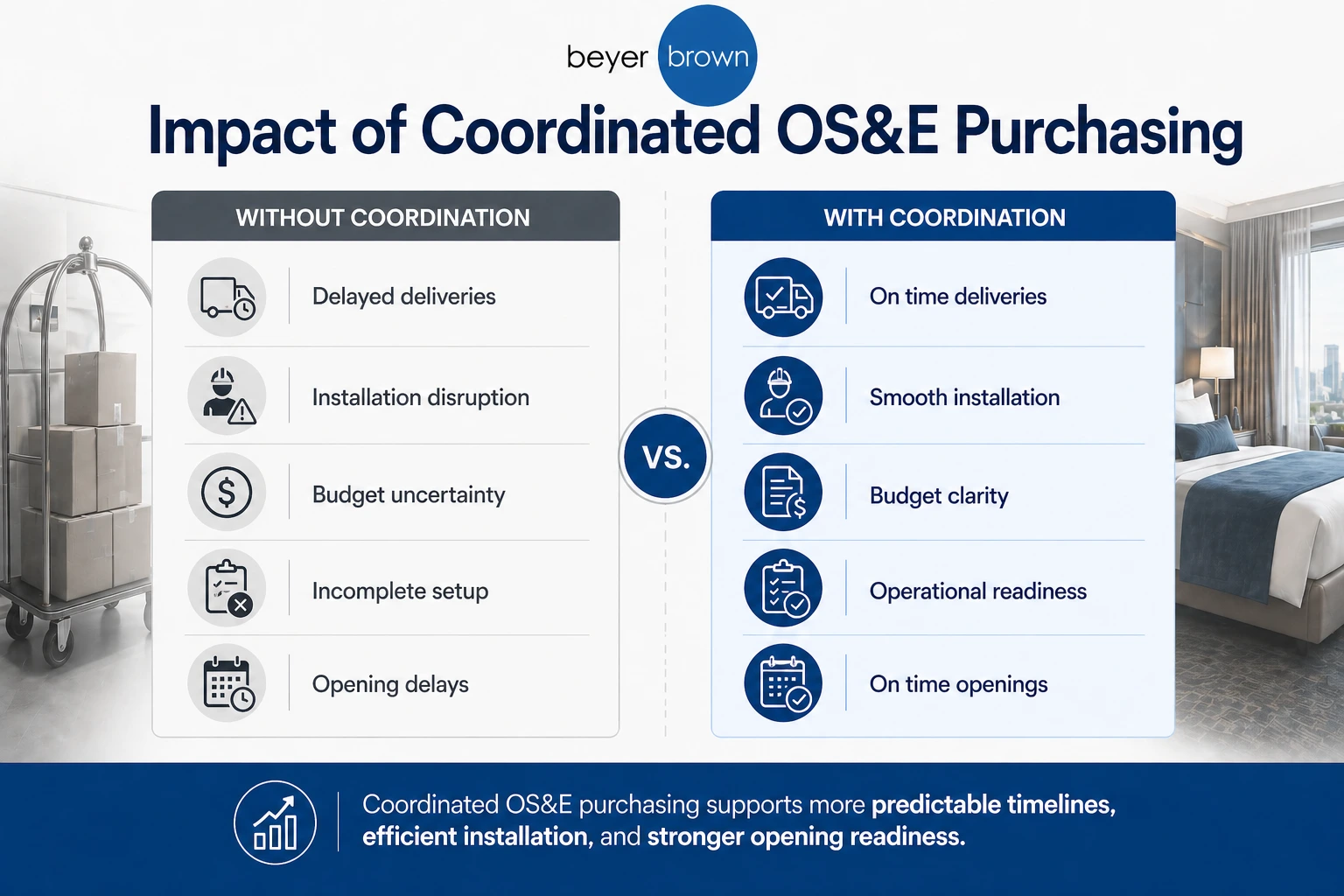
Coordinated OS&E purchasing supports on time openings by creating consistency across procurement, logistics, and installation.
Supporting On Time Openings Through Coordination
On time openings are achieved through structured planning and consistent coordination.
OS&E purchasing plays a critical role in this process. When it is aligned with procurement, logistics, and installation, it supports clarity, confidence, and control across every stage.
For owners and developers, coordinated OS&E purchasing provides a more reliable path to opening. It reduces uncertainty, supports decision making, and ensures that operational readiness is achieved without disruption.
Beyer Brown approaches OS&E purchasing with a focus on alignment and long term partnership, supporting projects that open on time and perform as intended.