
SHARE



Why Quantity Verification Before Procurement Matters
In hospitality development, early decisions shape the success of the entire project. While attention is often placed on design, construction, and sourcing, one of the most critical steps occurs before procurement begins: quantity verification.
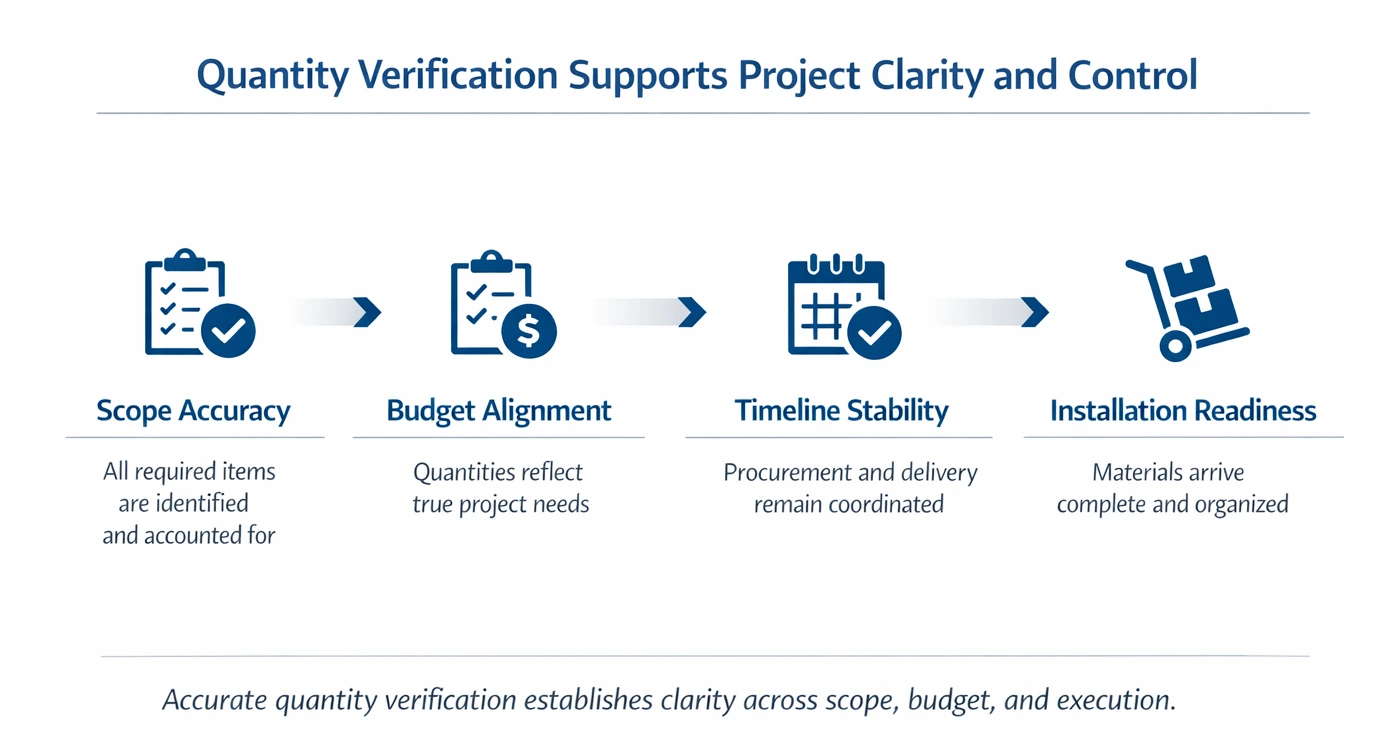
Quantity verification before procurement ensures that all required items are identified, aligned with project scope, and accurately reflected in budgets and timelines. Without this step, procurement decisions are based on incomplete or inconsistent information, increasing the risk of delays, cost adjustments, and operational gaps.
As part of the broader hospitality procurement process, quantity verification supports clarity across every stage of execution. When quantities are accurate, teams can move forward with confidence, knowing that procurement planning is built on a reliable foundation. This level of clarity is essential for effective procurement risk management in hospitality projects.
Why Quantity Verification Matters to Owners and Developers
For owners and developers, hospitality projects require a careful balance of design, financial performance, and operational readiness. Every decision made during procurement contributes to that balance.
Quantity verification directly supports three critical priorities: budget control, timeline stability, and project confidence.
Budget Accuracy and Procurement Planning
Quantity verification before procurement plays a direct role in financial accuracy. Procurement budgets rely on precise quantity inputs, and even small discrepancies can lead to significant cost variations.
During early procurement planning in hospitality projects, accurate quantities support more informed financial decisions. This is especially important when aligning with early stage budgeting strategies that guide procurement direction and cost expectations.
By ensuring project quantity accuracy, owners and developers gain greater visibility into costs and can make decisions with confidence, supported by structured preliminary budgeting processes.
Timeline Stability and Procurement Coordination
The hospitality procurement process depends on accurate quantities to maintain schedule alignment. Orders, production timelines, and delivery coordination are all based on expected quantities.
When quantity verification is overlooked, procurement timelines become less predictable. Missing items can delay installation, while excess materials can create logistical challenges.
Quantity verification before procurement helps maintain timeline stability by ensuring that all required items are accounted for early in the process.
Confidence Across Project Stakeholders
Hospitality projects require coordination across multiple teams, including ownership, design, and construction. Each group depends on consistent information to move forward effectively.
When quantity discrepancies arise, it introduces uncertainty and forces reactive decision making. This can affect approvals, coordination, and overall project momentum.
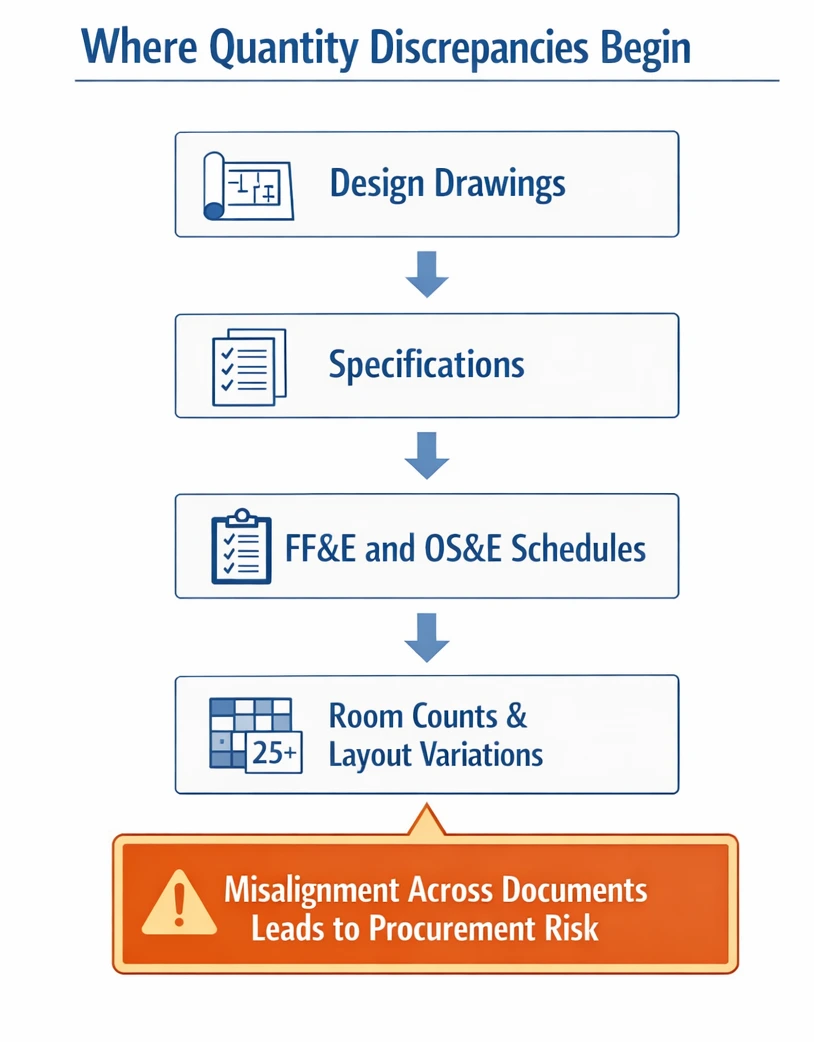
Clear and verified quantities support a more structured procurement process, allowing stakeholders to move forward with clarity and alignment.
How Quantity Verification Supports the Hospitality Procurement Process
At Beyer Brown, quantity verification is approached as a critical early phase of procurement, not a secondary task. It is a structured process designed to bring clarity, alignment, and accuracy before purchasing begins.
The goal is not simply to confirm numbers. It is to ensure that every quantity reflects the full scope of the project and supports coordinated execution.
Alignment with Procurement Strategy
Quantity verification before procurement is not an isolated task. It is an integrated part of procurement planning in hospitality projects.
Each item is evaluated in relation to design intent, operational needs, and overall project scope. This ensures that procurement decisions reflect both accuracy and functionality while supporting a structured FF&E procurement strategy aligned with project goals.
Cross Coordination Across Project Documentation
One of the most common challenges in hospitality procurement is misalignment across documentation. Drawings, specifications, and schedules often contain variations that impact quantity accuracy.
A structured quantity verification process includes:
-
Reviewing architectural drawings and layouts
-
Cross checking specifications and schedules
-
Confirming room counts and space requirements
-
Identifying gaps or overlaps in scope
This level of coordination reduces procurement risk and supports stronger specification alignment across all project stakeholders.
Early Identification of Procurement Risk
Certain areas of a project are more susceptible to quantity discrepancies, including guest rooms, public areas, and operational spaces.
By identifying these areas early, quantity verification helps mitigate procurement risk and prevents issues from escalating later in the project.
Clear Documentation and Quantity Alignment
Once quantities are verified, they are documented and shared across the project team. This creates a consistent reference point for procurement planning and execution.
This level of clarity supports accurate purchasing decisions and consistent coordination across teams.
The Quantity Verification Process Before Procurement Begins
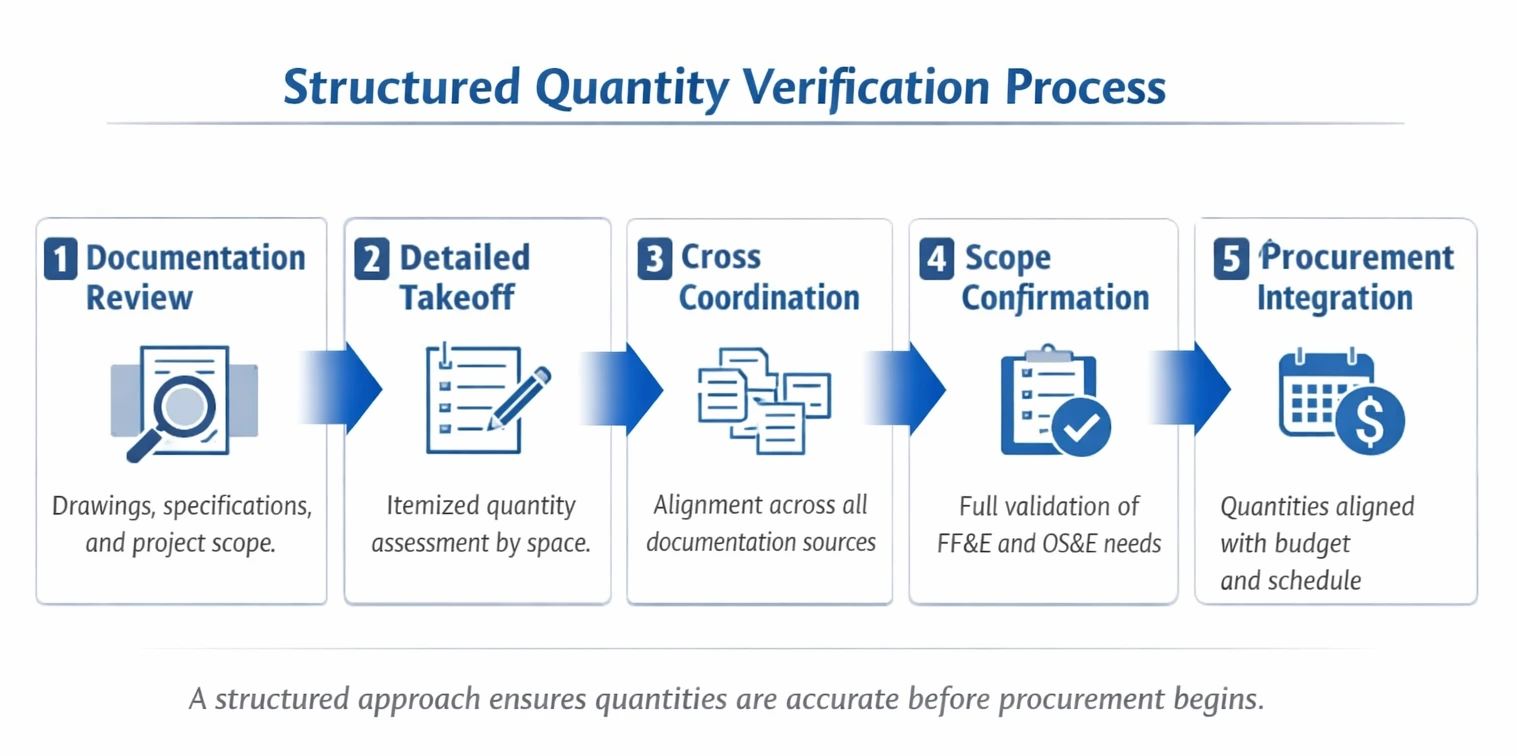
Quantity verification follows a disciplined and methodical process. Each step is designed to reduce uncertainty and ensure that all items are accounted for before procurement begins.
Step 1: Documentation Review
The process begins with a comprehensive review of all available documentation, including:
-
Architectural drawings
-
Interior design packages
-
FF&E and OS&E schedules
-
Brand standards and requirements
This review establishes the baseline understanding of project scope.
Step 2: Detailed Quantity Takeoff
A structured takeoff is conducted to determine the exact quantities required for each space. This step ensures that all items are accounted for based on actual project conditions and follows a defined takeoff and quantity verification methodology.
Step 3: Cross Coordination and Validation
Quantities are validated across all documentation sources to ensure consistency. Any discrepancies are identified and resolved before procurement begins.
Step 4: Scope Confirmation
Once quantities are aligned, the full procurement scope is confirmed. This includes all FF&E and OS&E items required for project completion and operation, including full OS&E purchasing requirements across departments.
Step 5: Integration into Procurement Planning
Verified quantities are integrated into procurement schedules, budgets, and logistics strategies. This step also supports informed decision making around procurement models such as direct purchasing versus structured procurement approaches.
The Impact of Quantity Verification on Project Outcomes
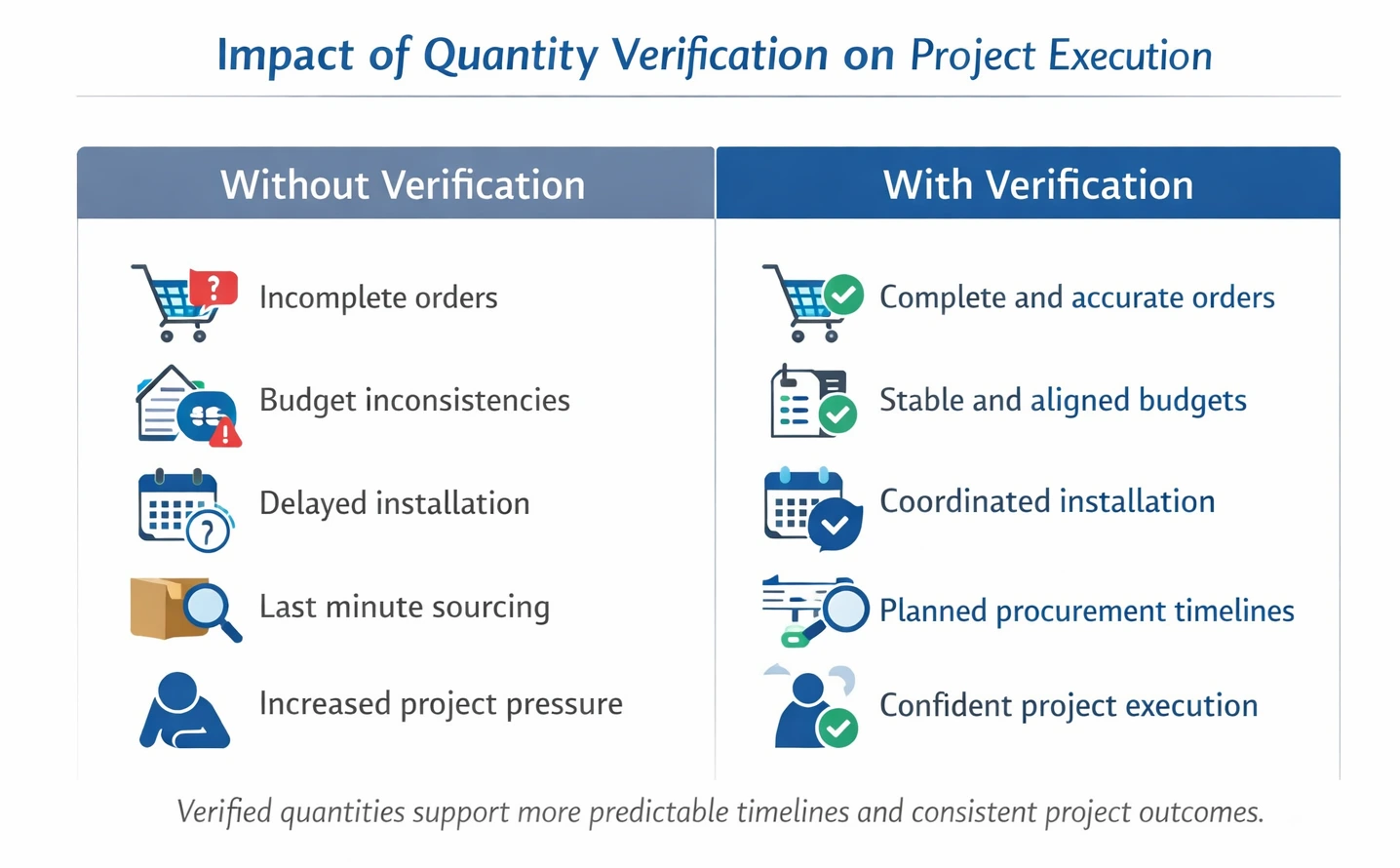
When quantity verification is approached with discipline and precision, the impact extends across the entire project lifecycle.
Reduced Procurement Risk
Quantity verification before procurement significantly reduces the risk of missing or incorrect orders. This supports a more stable and predictable procurement process.
Improved Budget Control
With accurate quantity data, procurement budgets become more reliable. This reduces the need for adjustments and supports better financial planning.
Streamlined Installation and Logistics
Accurate quantities allow for more effective logistics planning. Deliveries can be scheduled appropriately, and installation teams can work without disruption.
This is especially important when aligned with broader OS&E planning and operational readiness strategies for opening.
Greater Confidence and Project Clarity
When quantity verification is completed before procurement, it creates confidence across the project team. Decisions are based on accurate information, and execution becomes more predictable.
Quantity Verification as a Foundation for Procurement Success
Quantity verification before procurement is a critical step in the hospitality procurement process. It ensures that project scope, budgets, and timelines are aligned before purchasing begins.
By focusing on project quantity accuracy early, owners and developers reduce risk, improve coordination, and support more consistent outcomes.
At Beyer Brown, this structured approach supports a more reliable procurement process and a higher level of confidence at every stage of the project.