


The Hidden Cost of Choosing the Lowest FF&E Bid for Luxury Hotels
The lowest FF&E bid can offer a legitimate opportunity to reduce capital expenditure on a luxury hotel project. Before approving it, ownership needs to understand whether competing proposals cover the same quantities, specifications, commercial terms, and delivery requirements. A price difference becomes meaningful when the team can explain what accounts for it.
Two vendors quoting the same lounge chair specification may make different allowances for frame construction, upholstery, finish, packaging, or freight. One may offer a competitive price for the complete requirement. Another may exclude costs or propose deviations that require further review. Accepting either quotation without resolving those differences can leave the project carrying expenses or obligations absent from the approved comparison.
Luxury hotel teams must weigh these conditions alongside comfort, proportion, craftsmanship, and the consistency of the approved design. Beyer Brown connects those priorities through specification review, quotation analysis, purchasing coordination, and delivery planning. That work gives ownership a clearer basis for distinguishing a competitive purchase from a cost reduction that creates additional exposure elsewhere in the project.
Why the Lowest FF&E Bid Requires Closer Review
Incomplete scope can overstate the saving
For upholstered seating, one vendor may include the specified fabric while another quotes fabrication using customer supplied material. The second proposal leaves fabric purchasing, shipment to the manufacturer, and associated charges outside its total. Required testing, treatments, or sample costs may also be excluded. Unless those responsibilities are identified, the comparison can understate the expenditure needed to deliver the approved product.
Delivery terms introduce similar differences. A factory price and a quotation that includes transportation to a receiving warehouse represent different commitments. Freight, applicable taxes, duties or tariffs, receiving, storage, final delivery, and installation need to be accounted for within the project budget, with responsibility assigned to the appropriate party.
An omitted expense cannot be treated as a saving simply because it sits outside the vendor’s proposal.
Product decisions shape maintenance and replacement costs
Once furnishings enter service, their construction and care requirements become operating considerations. Seating must withstand its intended use, but staff also need a practical way to clean it, maintain it, and address damage without unnecessary disruption.
Replaceable cushion covers, accessible upholstery components, and available replacement parts can influence the cost of maintaining a seating package. Their value depends on the product and the operator’s capabilities. A removable cover provides limited benefit if its approved cleaning method is impractical for the property or replacement covers are difficult to obtain.
Performance data requires the same scrutiny. A higher abrasion number alone does not establish that an upholstery selection will perform better in the intended hotel environment.
Cleaning compatibility, seam performance, appearance retention, and exposure conditions may also require evaluation. Beyer Brown’s specification assistance brings product information and vendor clarification into that discussion, allowing designers and operators to assess relevant requirements before purchasing advances.
Lead time must be measured against installation readiness
A quoted production duration needs to be understood alongside the conditions that start it. Depending on the vendor’s terms, manufacturing may require a deposit, approved shop drawings, confirmed finishes, and receipt of all customer supplied materials.
A proposal offering twelve weeks of production does not establish a delivery commitment twelve weeks after vendor selection. Sample preparation, review periods, revisions, transportation, and receiving must also fit within the project schedule.
A lower bid may still offer sound value, provided its schedule is achievable. If meeting the installation date requires expedited freight, split shipments, or another installer mobilization, those consequences belong in the evaluation. Ownership needs to understand the likely cost of placing the furnishings into service alongside the price of purchasing them.
How Beyer Brown Evaluates Value Before Purchasing
Beyer Brown’s FF&E procurement services bring specifications, quantities, vendor proposals, budget expectations, and delivery requirements into a coordinated purchasing process. Ownership gains a clearer understanding of what each proposal includes, where clarification is needed, and which differences could affect execution or hotel operations.

Establishing a reliable basis for budget decisions
Through preliminary FF&E budgeting, Beyer Brown connects the available scope, quantities, and current pricing with ownership’s financial expectations. Early allowances provide a planning reference, while developed specifications and vendor quotations allow the team to assess costs in greater detail.
When pricing exceeds an allowance, the next step is to understand the cause. Custom dimensions, material selection, fabrication requirements, quantities, or delivery assumptions may account for the difference. Identifying the cost driver gives the team a useful starting point for evaluating alternatives.
Beyer Brown coordinates pricing and vendor clarification so the appropriate stakeholders can assess those tradeoffs. Ownership can then consider the proposed saving alongside changes to design, performance, timing, or remaining cost exposure.
Documenting alternatives before they become commitments
Beyer Brown’s FF&E specification assistance helps identify omissions, inconsistencies, and product details that need resolution before an order is released.
A proposed tabletop substitution illustrates why that review matters. Changing the material may affect thickness, weight, edge detailing, base compatibility, cleaning requirements, and repair options. A similar appearance does not establish that the alternate will function in the same way.
Procurement obtains clarification about the proposed product and coordinates the information needed for review. The designer assesses its relationship to the approved design, while the operator evaluates relevant use and maintenance requirements. Technical questions are directed to the responsible project parties.
Once an alternative is approved, that direction must be reflected in the applicable specifications and purchasing documentation. Maintaining a clear record reduces the risk that a vendor prices one version, an approver reviews another, and the purchase order carries an incomplete description.
Coordinating furnishings with operational requirements
Furniture decisions also need to account for the equipment and supplies used around them. A restaurant table’s usable surface must accommodate the intended place setting and service arrangement. A cabinet intended for operational storage needs suitable internal dimensions and access for the items staff will place inside it.
Where the agreed scope includes OS&E purchasing, Beyer Brown can coordinate purchasing information across these related packages. Questions about dimensions, quantities, and intended use can then be addressed with the relevant vendors and project stakeholders before products arrive.
How a Disciplined FF&E Bid Review Works
The value established during bid review depends on carrying the accepted requirements through purchasing and execution.
Beyer Brown’s FF&E procurement process connects quotation analysis with purchasing management, product tracking, logistics, installation coordination, and deficiency resolution. Within the agreed scope, each stage maintains a record of what the vendor is expected to provide and what the project requires next.
Confirm Quantities and the Specification Basis
Comparable pricing begins with consistent instructions. Vendors need the current specification revisions, applicable quantities, delivery requirements, and a clear understanding of the items included in their package.
Beyer Brown reviews specifications and floor plans, verifies takeoffs, and coordinates clarification where information is incomplete. This helps identify discrepancies such as a revised furniture layout that has not been reflected in the quantity schedule or a finish change that has reached only some bidders.
Guestroom types, suites, and public areas may carry different product assignments. Those distinctions need to remain identifiable in the pricing request. Agreed spare quantities should also be recorded separately so they can be evaluated without obscuring the quantities required for installation.
Reconcile Exclusions and Proposed Deviations
Bid leveling organizes quotations against a common requirement and identifies differences that need resolution before approval.
For a custom furniture package, this can include construction, materials, dimensions, upholstery responsibilities, samples, packaging, payment terms, and delivery assumptions. A qualification such as “standard finish included” requires clarification if the specification calls for a custom finish. An allowance for fabric needs review against the actual selection and confirmed material requirement.
Beyer Brown coordinates vendor responses and analyzes their effect on pricing and execution. An exclusion remains visible until its cost and responsibility are understood. A proposed deviation is directed to the appropriate approvers, with the information needed to assess the change.

Use Samples and Model Rooms to Resolve Product Questions
The appropriate review depends on the product’s complexity, quantity, and intended application. A custom chair repeated throughout a public space may justify a prototype to evaluate details that drawings and material samples cannot establish.
Finish samples, shop drawings, prototypes, and model rooms answer different questions. A finish sample supports review of color and surface appearance. Shop drawings communicate dimensions and fabrication details. A prototype allows evaluation of the assembled product, while a model room brings furnishings into their intended relationship with architecture, lighting, and circulation.
Beyer Brown coordinates purchasing for model rooms and works with the relevant project and installation teams as required by the scope. Review comments need to be resolved and incorporated into the applicable records before the affected production proceeds.
Care instructions, replacement components, and warranty conditions also warrant attention during product evaluation. A lengthy warranty may still exclude labor or transportation, leaving ownership with costs when a repair is required.
Carry Approved Requirements into Purchasing Records
The purchase order needs to reflect the accepted proposal and subsequent approvals. Product references, quantities, pricing, specification revisions, commercial terms, and delivery requirements should provide a consistent basis for the vendor’s commitment.
Vendor acknowledgments require review against that order. A different finish description, revised completion date, or added exclusion needs resolution rather than remaining buried in the returned paperwork.
Later changes require the same discipline. An upholstery revision may affect yardage, material availability, fabrication cost, and production timing. Beyer Brown coordinates clarification and approved purchasing updates so the team has a dependable reference for what the vendor is expected to deliver.
Track Production Against Delivery and Installation Needs
A factory completion date establishes only one milestone in the delivery sequence. Packaging, transportation, receiving, storage, final delivery, and site handling must also fit the installation plan.
Beyer Brown tracks product progress and coordinates information with freight providers and the selected installation contractor. Vendor updates need to be considered alongside site readiness, receiving arrangements, and the sequence in which areas will be furnished.
If an order moves later, the team needs to identify the affected spaces and assess available responses. Split shipments or expedited transportation may be options, but their cost and practical benefit require review. An earlier shipment can also create expense if the property is not ready and additional storage or handling becomes necessary.
Keep Deficiencies Visible Through Closeout
Damage, shortages, and specification discrepancies require a clear record of the affected items and the action needed to resolve them. Relevant information may include purchase order references, quantities, photographs, receiving records, and approved product details.
Beyer Brown coordinates procurement related deficiency resolution with ownership and vendors within the agreed scope. Proposed repairs or replacements need a responsible party and a resolution schedule that accounts for access, installation requirements, and hotel operations.
Closeout reporting should distinguish completed work from outstanding items and identify the next action required. This gives ownership visibility into remaining obligations and helps prevent unresolved purchasing issues from passing into operations without a clear plan.
Project Perspective: The London West Hollywood
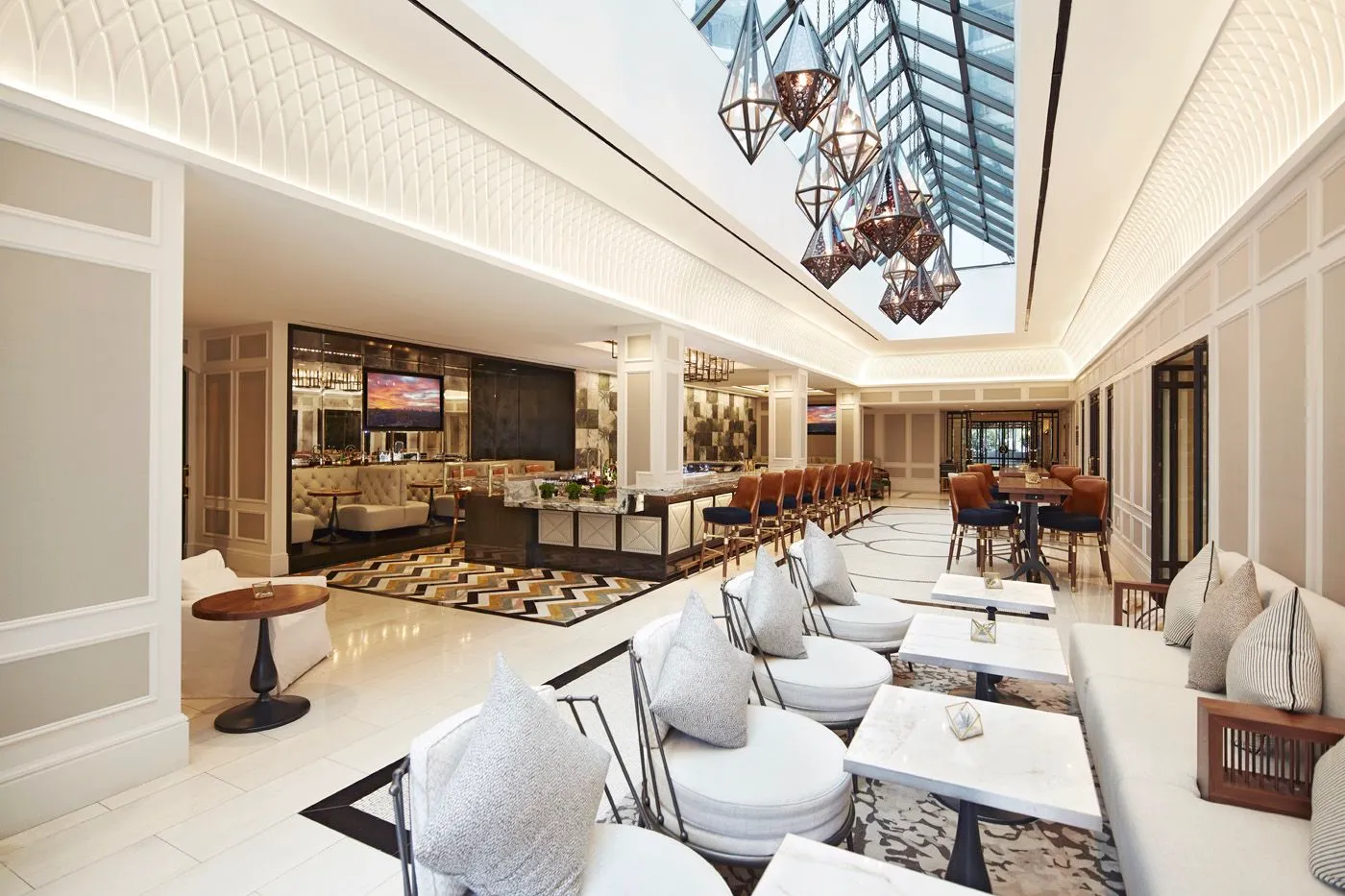
At The London West Hollywood at Beverly Hills, suite accommodations, dining venues, lounges, and a rooftop pool bring different furnishing requirements into one luxury environment. Each space contributes to the property’s identity, while its furniture must respond to a particular pattern of guest use, service, and maintenance.

Evaluating Alternatives Within the Space they Serve
In a dining setting, chair dimensions must work with table height, underside clearance, and the approved seating arrangement. Changes to arm height or seat width can affect how closely a chair approaches the table and how much space remains for guests and service staff. A lower quotation needs to be considered alongside those relationships.
The rooftop introduces environmental and operational considerations. Frames, finishes, upholstery, and cushion construction need evaluation for the intended exposure, cleaning procedures, and handling requirements. Manufacturer information and operator input are necessary to establish suitability; appearance alone cannot resolve those questions.
Protecting the Relationships Behind the Finished Environment
These applications illustrate the limits of evaluating furniture as individual line items. A chair belongs to a seating arrangement, a table serves an operating concept, and outdoor furnishings must work within the property’s care and handling routines.
An alternate should be evaluated within the approved layout and operating requirements of its intended location. A smaller chair may reduce the purchase price while changing seating comfort or spacing. A different outdoor cushion construction may change drying and handling requirements. Those consequences need to be understood before the saving is accepted.

A Procurement Partnership Built Around Lasting Value
The lowest FF&E bid can be the right choice when the scope is complete, the product meets the approved requirements, and the vendor’s commitments align with the project schedule. Ownership needs a clear understanding of what accounts for the price difference and which costs or responsibilities remain outside it.
Beyer Brown helps establish that understanding through budget analysis, specification review, vendor clarification, and coordinated purchasing. The work continues after approval, keeping purchasing records, production updates, and delivery requirements connected as the project advances. When conditions change, that continuity gives the team a basis for assessing the consequences and deciding how to respond.
For owners and developers selecting a procurement partner, the ability to explain a recommendation matters as much as the ability to obtain competitive pricing. A sound recommendation makes the tradeoffs visible, respects the responsibilities of designers and operators, and accounts for the work required to place furnishings into service.
Lasting value depends on how well the approved purchase serves the property. A thoughtful procurement partnership helps ownership make those decisions with greater confidence, preserving the relationship between the capital invested, the intended guest experience, and the demands of daily hotel operations.